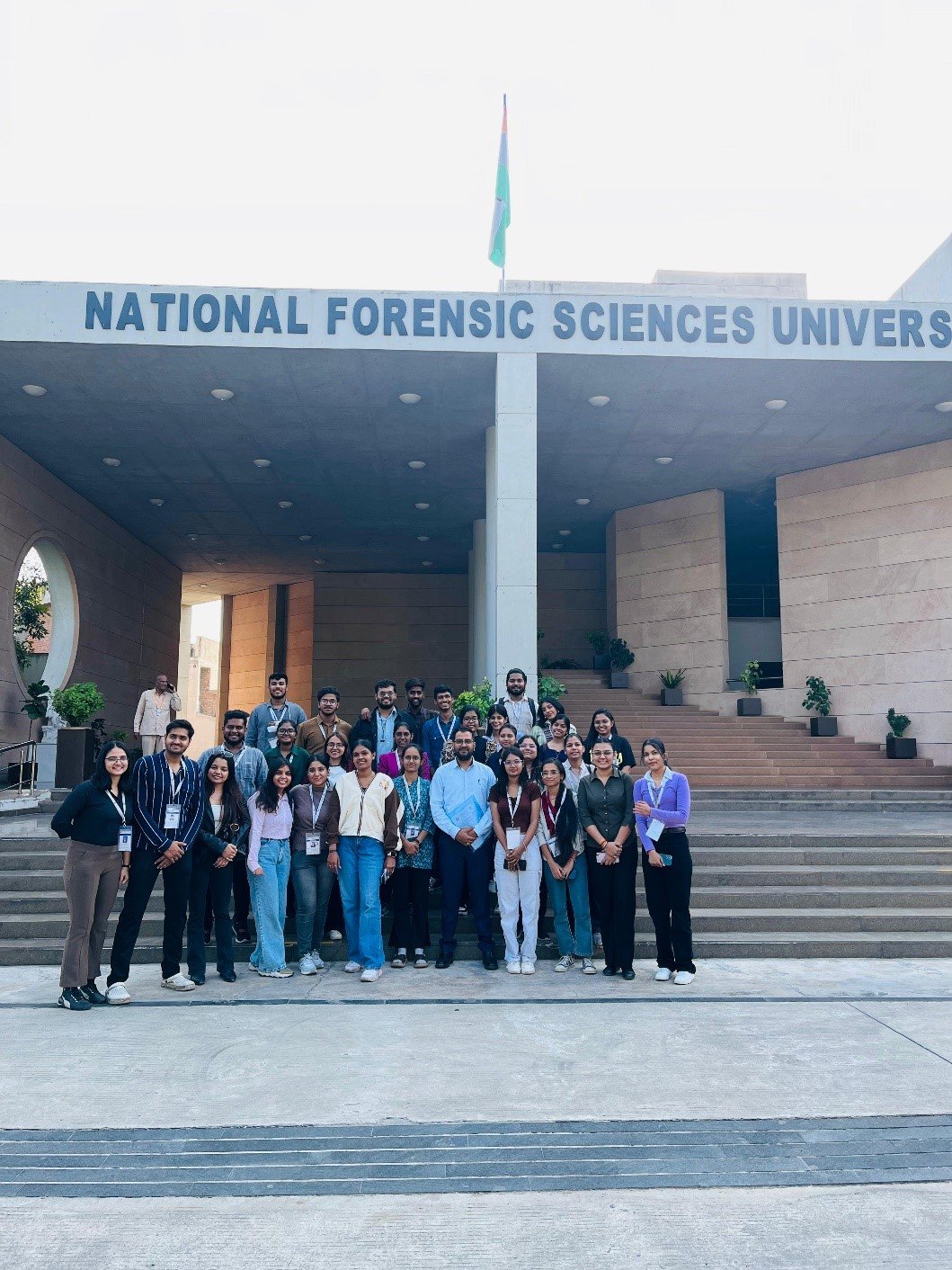
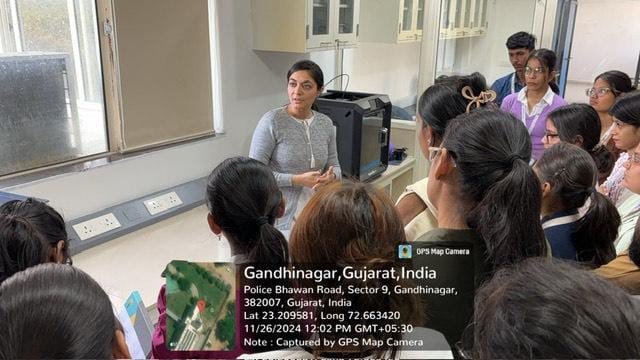
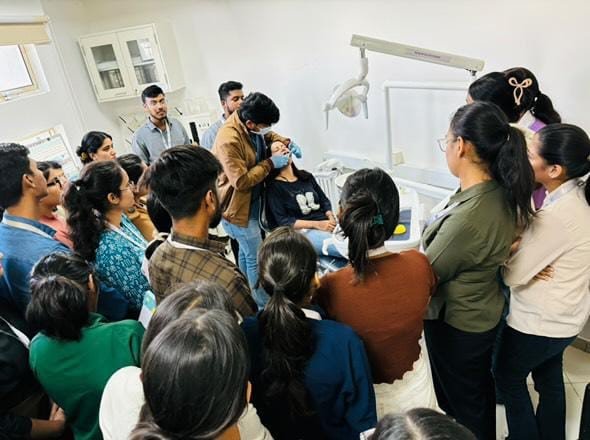
Date of Visit: November 27, 2024
Location: Narnarayan Shastri Institute of Technology (NSIT), Jetalpur, Ahmedabad
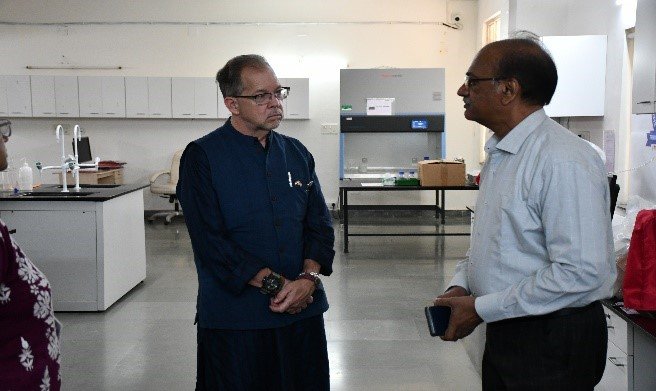
Narnarayan Shastri Institute of Technology (NSIT) organized an Expert Talk on Forensic Anthropology and Archaeology, featuring Dr. William Belcher, Associate Professor at the University of Nebraska-Lincoln, United States, as the keynote speaker. Dr. Belcher, a board-certified forensic anthropologist and archaeologist, is renowned for his expertise in environmental archaeology and zooarchaeology.
Session Highlights:
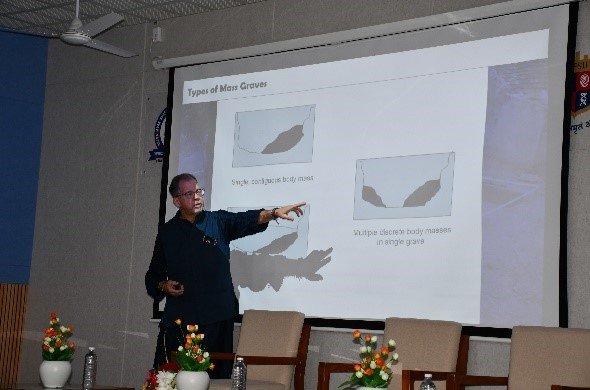
Dr. Belcher delivered an enlightening talk titled “Forensic Archaeology and the Identification of World War II Mass Graves in the South Pacific Ocean.” His session offered a comprehensive understanding of the role of forensic archaeology in identifying soldiers classified as “Killed in Action (KIA)” or “Missing in Action (MIA)” during World War II.
He detailed the process of excavating human remains, particularly from mass graves, and discussed various types of graves, along with the methods and considerations involved in their excavation. Dr. Belcher outlined the following approaches used to identify skeletal remains:
- Anthropological Method: Determining the age, sex, and stature of individuals.
- Odontological Method: Analyzing dental history and comparing records.
- Material Evidence Analysis: Examining physical evidence found alongside skeletal remains.
- DNA Analysis: Utilizing mitochondrial DNA (MtDNA) and nuclear DNA for identification.
The talk also included detailed case studies showcasing instances where human skeletal remains were excavated and identified successfully, emphasizing the practical application of these methods.
Audience and Participation:
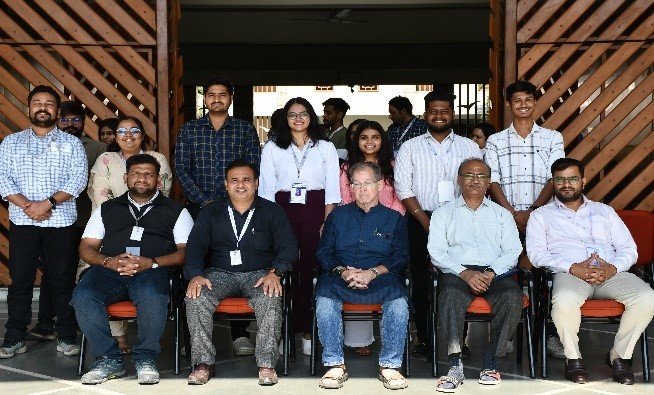
The event was attended by NSIT’s Principal, Dr. Nikunj Brahmbhatt, and the dedicated faculty of the forensic science department. Students from both Master’s and Bachelor’s programs actively participated, gaining valuable insights and inspiration from Dr. Belcher’s expertise and career journey.
Impact and Takeaway:
Dr. Belcher’s talk not only enhanced the understanding of forensic anthropology and archaeology among students but also shed light on its application to historical investigations. The event served as a significant platform for aspiring forensic professionals to learn about the importance of interdisciplinary approaches in solving historical mysteries and addressing humanitarian concerns.
Highlights in Pictures

Conclusion:
The Expert Talk was a resounding success, leaving the attendees motivated and well-informed about the relevance and advancements in forensic anthropology and archaeology. NSIT remains committed to organizing such impactful events that foster academic growth and professional development.