
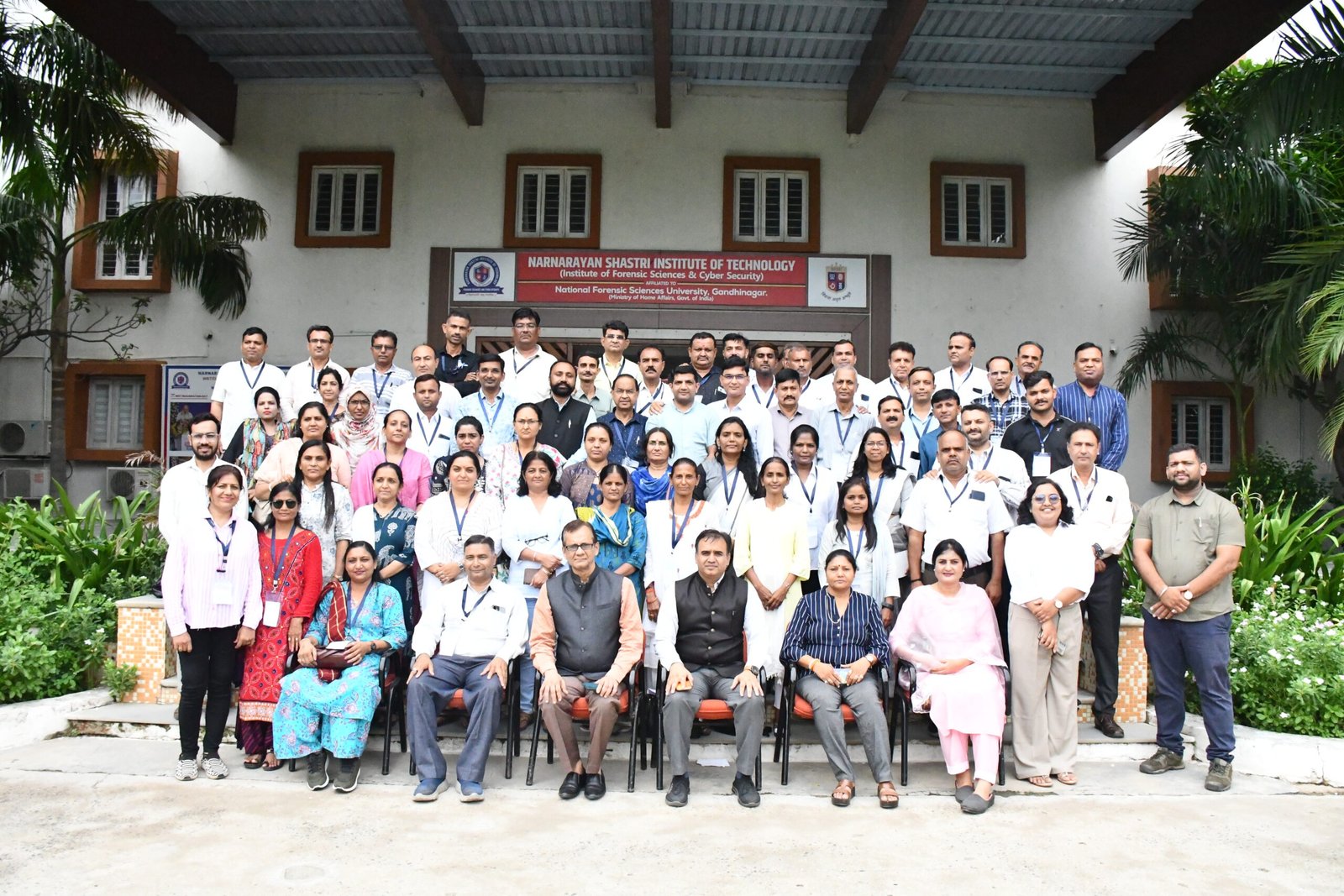
Dates: June 18–20, 2025
Venue: Seminar Hall, NSIT–IFSCS, Jetalpur, Ahmedabad
Organized by: Narnarayan Shastri Institute of Technology – Institute of Forensic Science and Cyber Security (NSIT-IFSCS)
Event Overview:
On June 18, 2025, NSIT–IFSCS inaugurated a prestigious three-day national-level training program titled “Crime Scene Photography and Videography” at its Jetalpur campus. The initiative aims to assist police officers and public prosecutors in understanding chain of custody management and presenting clinching evidence in a court of law with hands-on training and theoretical understanding in the scientific visual documentation of crime scenes, a key component of modern forensic investigation and legal procedure.
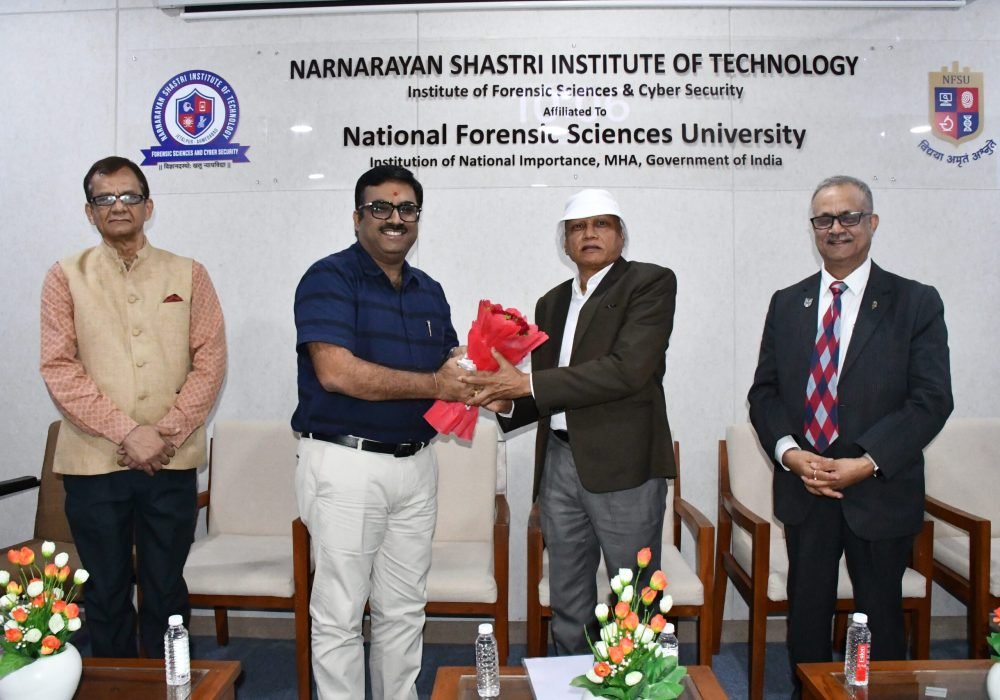
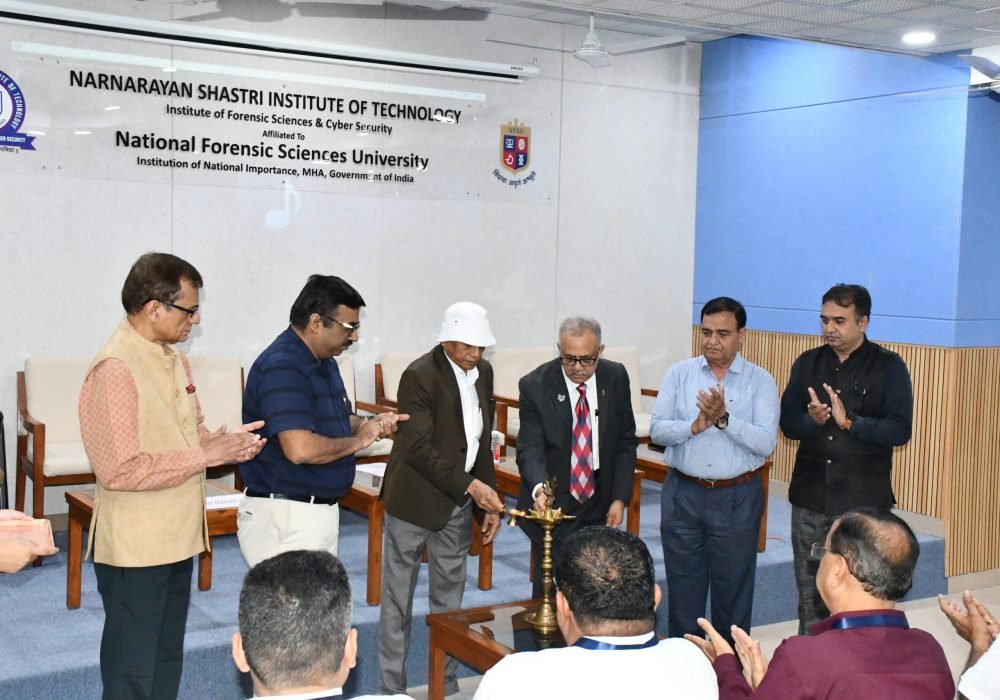
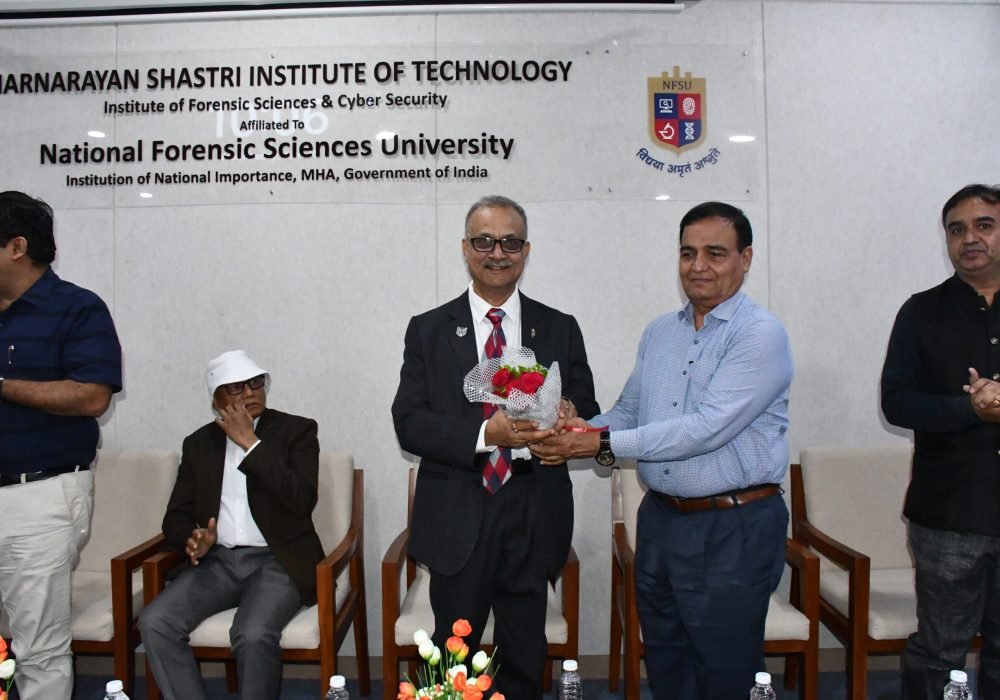
Inauguration Ceremony
The training program was formally inaugurated by Shri Ambalal Patel, Director of Prosecution, Government of Gujarat. During his inaugural address, Shri Patel highlighted the crucial role of accurate, ethical, and legally sound photographic documentation in the criminal justice process. He emphasized that such documentation is vital for reinforcing the integrity of investigations and ensuring the admissibility of visual evidence in courts of law.
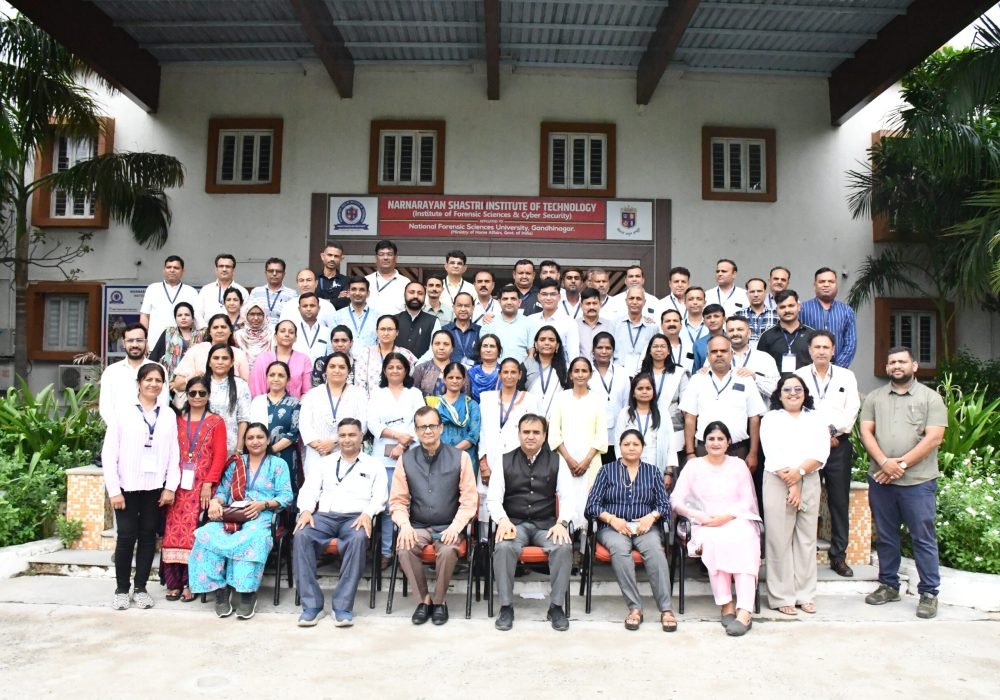
The ceremony witnessed participation from 61 delegates representing various regions across India, including:
58 Public Prosecutors
2 Forest Police Officers
1 Officer from Kerala Police
The diverse attendance of investigators, legal professionals, and academic personnel reflected the interdisciplinary significance of the training, underlining its relevance across both law enforcement and legal domains.
Keynote & Technical Sessions – Day 1
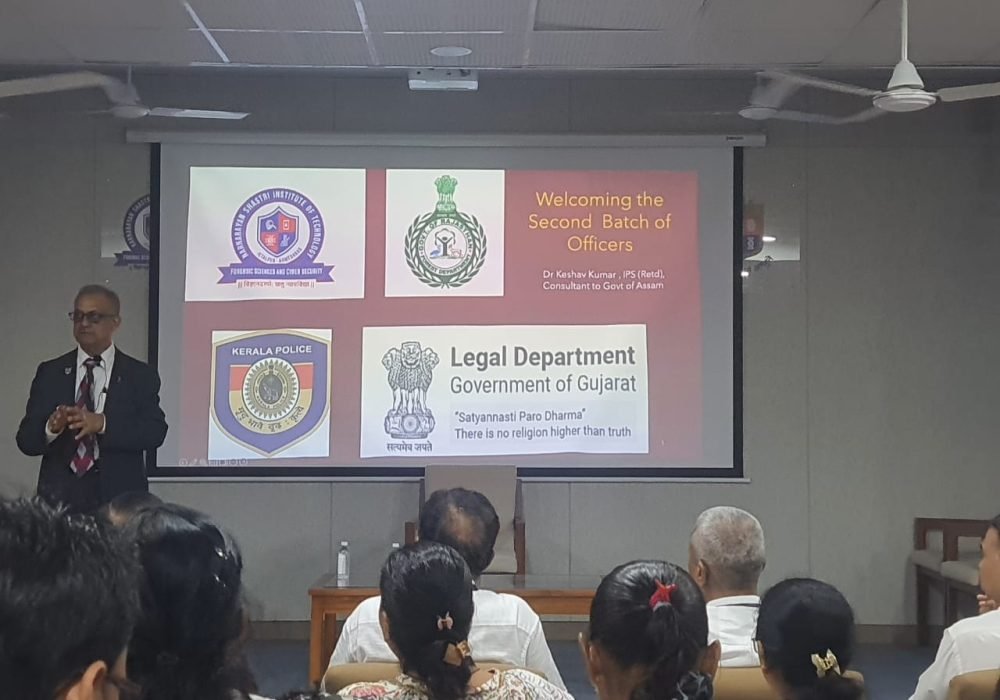
The inaugural keynote session was delivered by Dr. Keshav Kumar (IPS Retd.), Former Director General of Police, Gujarat and Advisor to the Government of Assam. Drawing upon his extensive experience in high-profile criminal investigations, Dr. Kumar emphasized the real-world applications of forensic photography in preserving evidence and resolving complex cases.
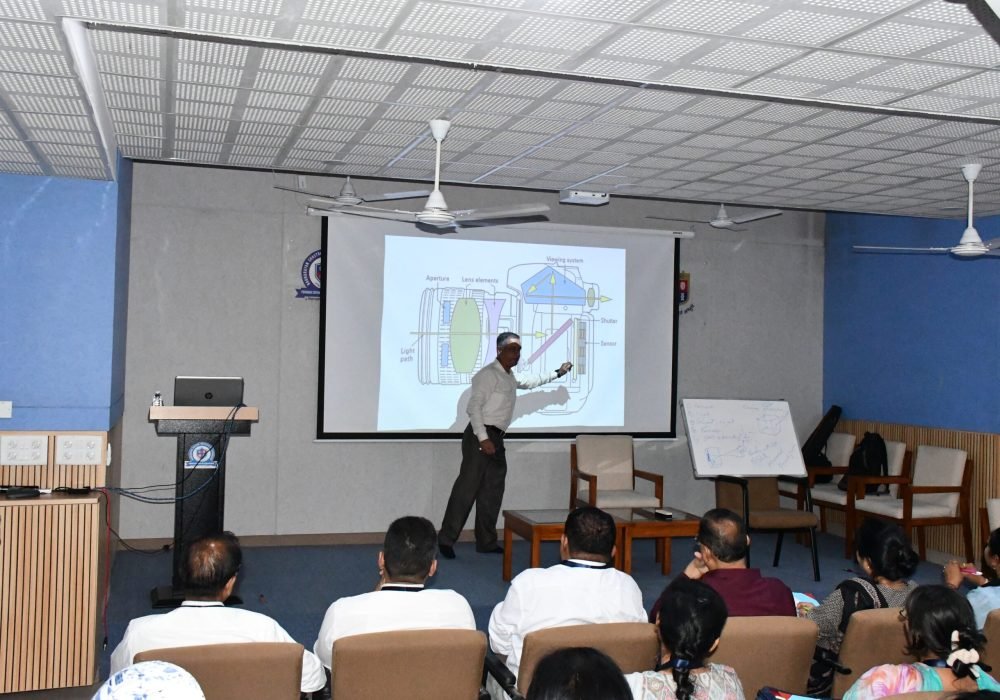
Following the keynote, an intensive technical session was conducted by Mr. Bhargav Pandya, expert photographer from the Institute of Photography Excellence, Ahmedabad. The session covered:
The importance of photographic perspective in evidence collection
Overview of macro and forensic photography techniques
Introduction to camera types: DSLR, mirrorless, point-and-shoot
Use of lenses, tripods, lighting equipment, and optimal settings
Live hands-on demonstration followed by an interactive Q&A
Subsequent Sessions – June 19–20, 2025
Over the next two days, the training progressed into advanced techniques, drone-based documentation, and legal frameworks through a series of expert-led sessions and practical exercises.
Day 2 Highlights
Mr. Amit, Drone Lab Technologies
Drone photography and aerial crime scene documentation
Applications in crime scene mapping and surveillance
Mr. Bhargav Pandya
Basics of videography for forensic purposes
Techniques for dynamic evidence capture, walkthroughs, and camcorder usage
Mr. Ronak Panchal, All India Reporter (AIR), Gujarat
Introduction to AIR’s digital legal tools and handling electronic evidence
Day 3 Highlights
Dr. Anurag Shrivastava (Online Session)
Techniques for low-light evidence photography
Use of alternate light sources and video documentation
Prof. K. V. Ravi Kumar & Dr. Parvesh Sharma
Use of UV, IR, and underwater photography
Discussion on metadata, legal implications, privacy, and ethical considerations
Practical Mock Investigation
Indoor and outdoor crime scene simulations
Team-based exercises: documentation, report writing, and evaluation
Course Objectives and Curriculum Alignment
The program was designed to align with the public prosecutor training curriculum, addressing the following key objectives:
Strengthening photographic and videographic documentation skills
Promoting understanding of legal and ethical standards
Providing hands-on training with forensic photography equipment
Building capacity to produce court-admissible visual evidence
Core Modules Covered
Introduction to Forensic Photography
Crime Scene Videography
Evidence Documentation
Advanced Techniques (Drones, UV, IR)
Legal & Ethical Considerations
Mock Crime Scene Exercises and Report Preparation
Valedictory Session and Certification
The program concluded on June 20, 2025, with a valedictory ceremony and certificate distribution. Participants expressed appreciation for the program’s interactive format, field-based content, and its direct applicability to their investigative roles. Many affirmed that the training had equipped them with practical skills essential for real-world criminal investigations.
Few Glimpses of the 3-Day Event
Prepared By:
Dr. Harjeet Singh
Asst. Professor, NSIT-IFSCS
Date: 18-20.06.2025
