Robert Green

Robert Green

Date of Visit: 30 April 2025

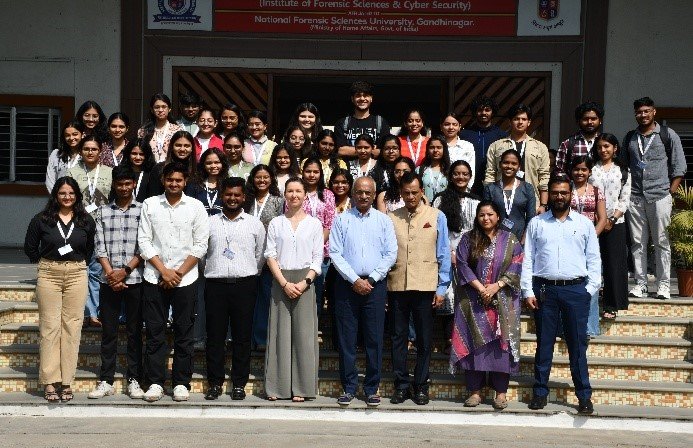
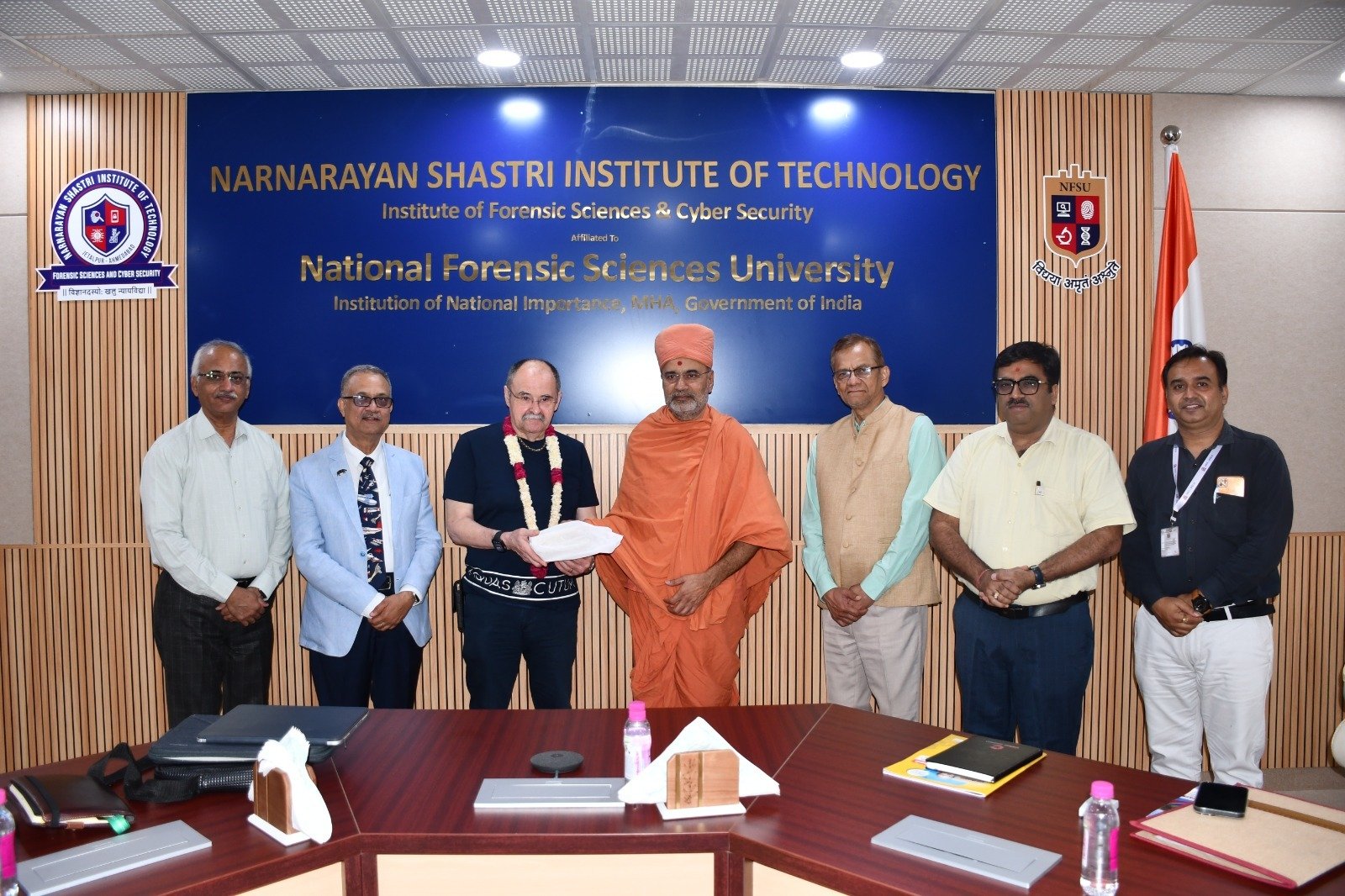
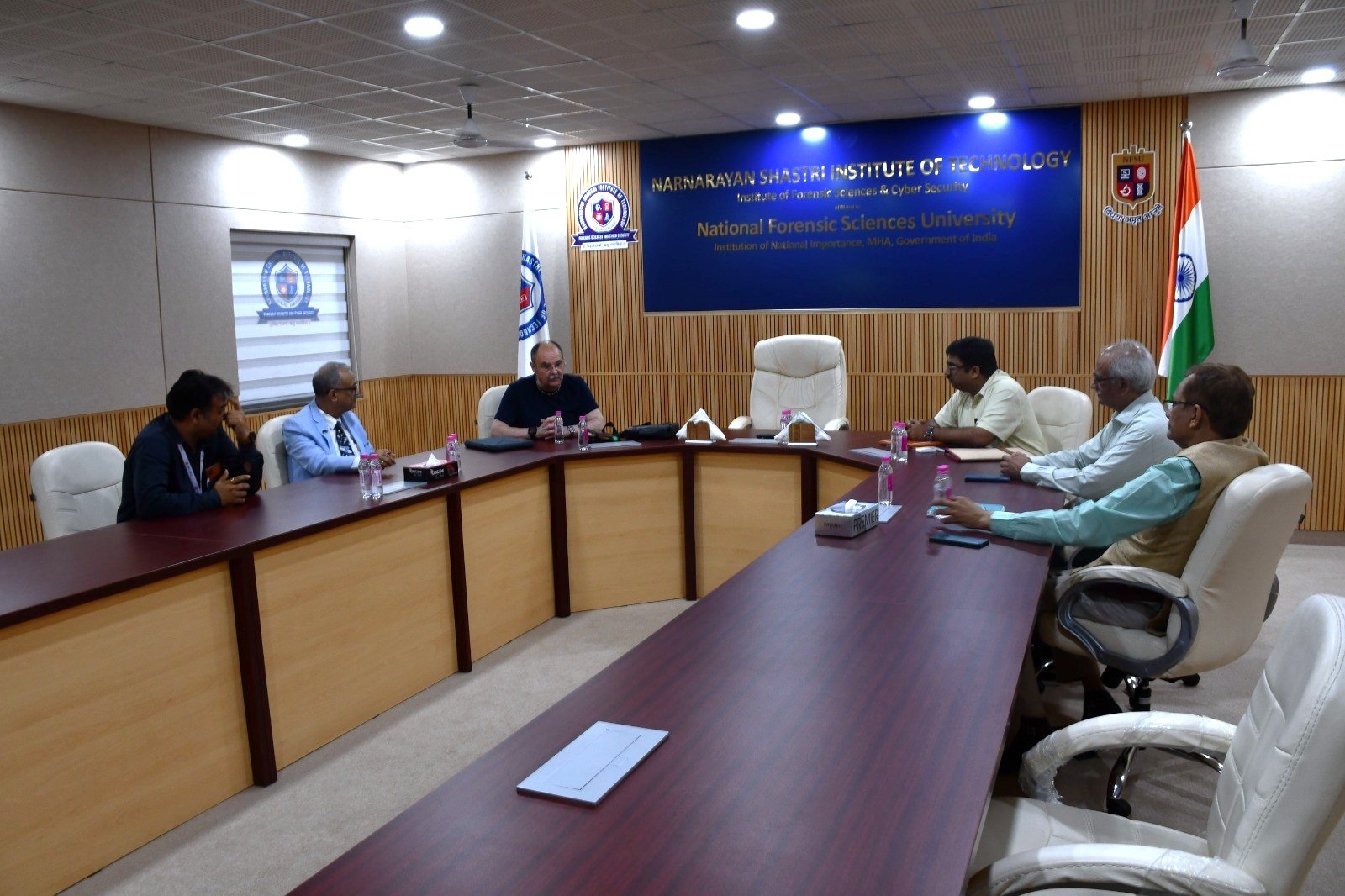
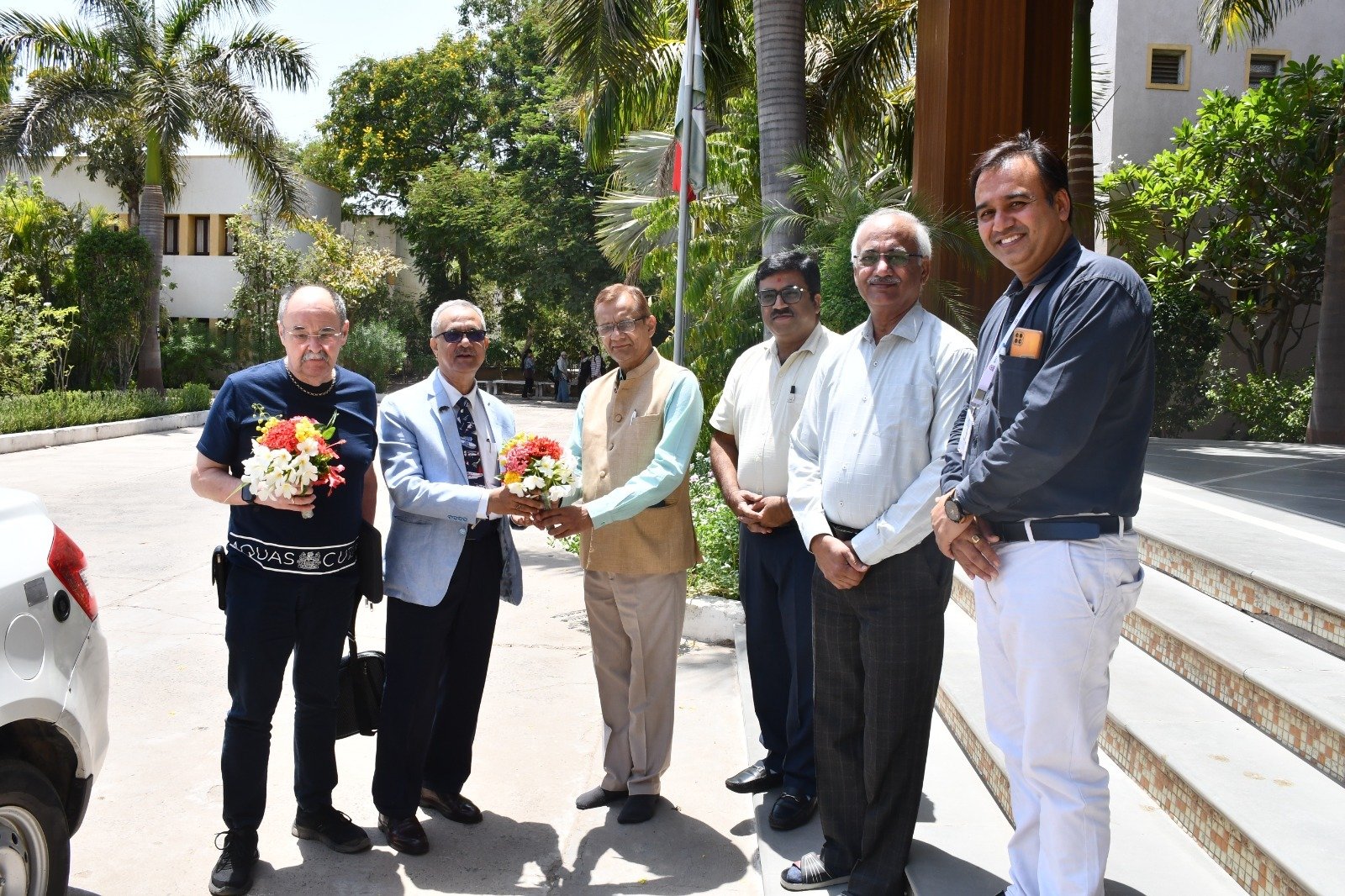
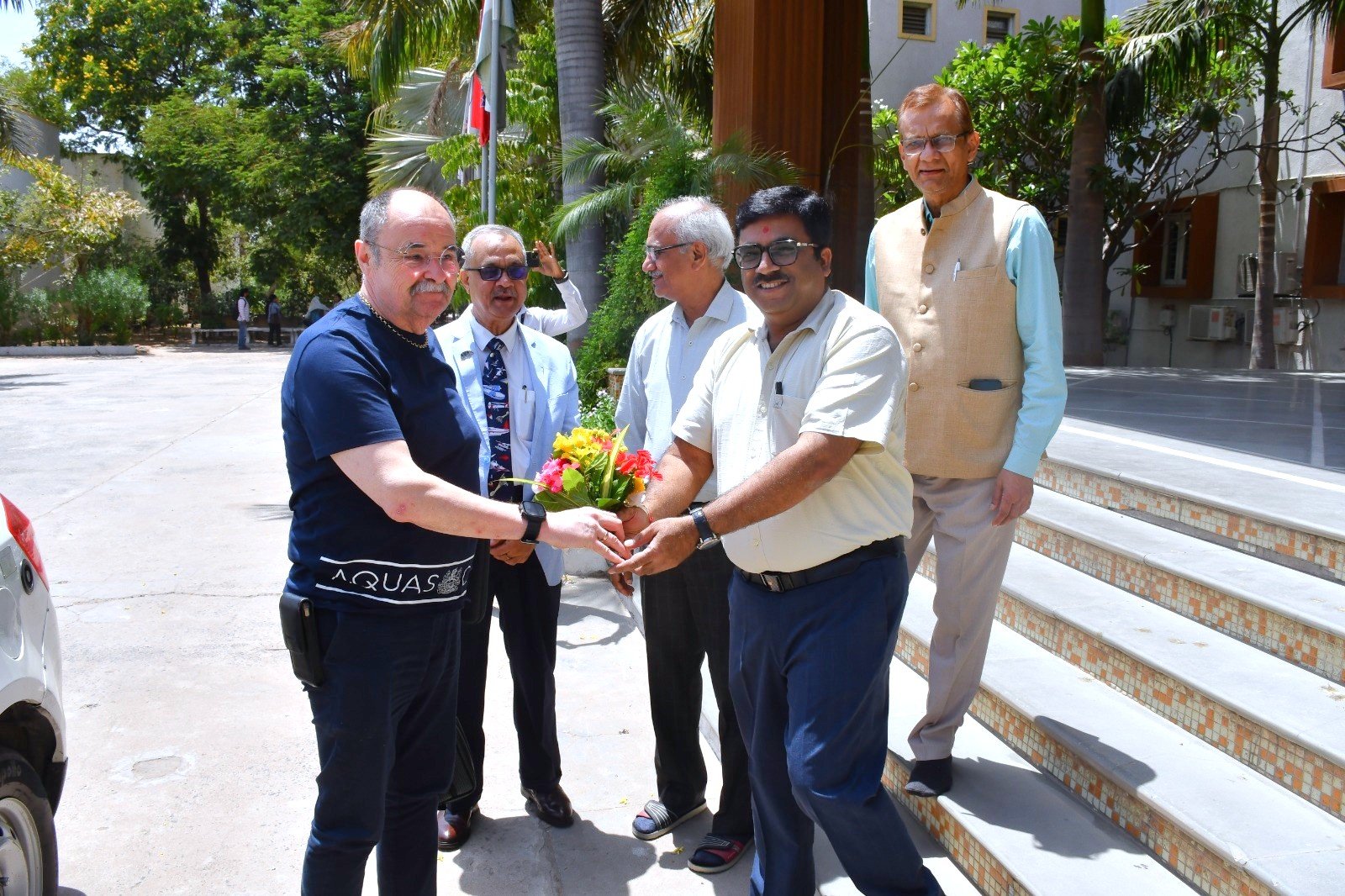
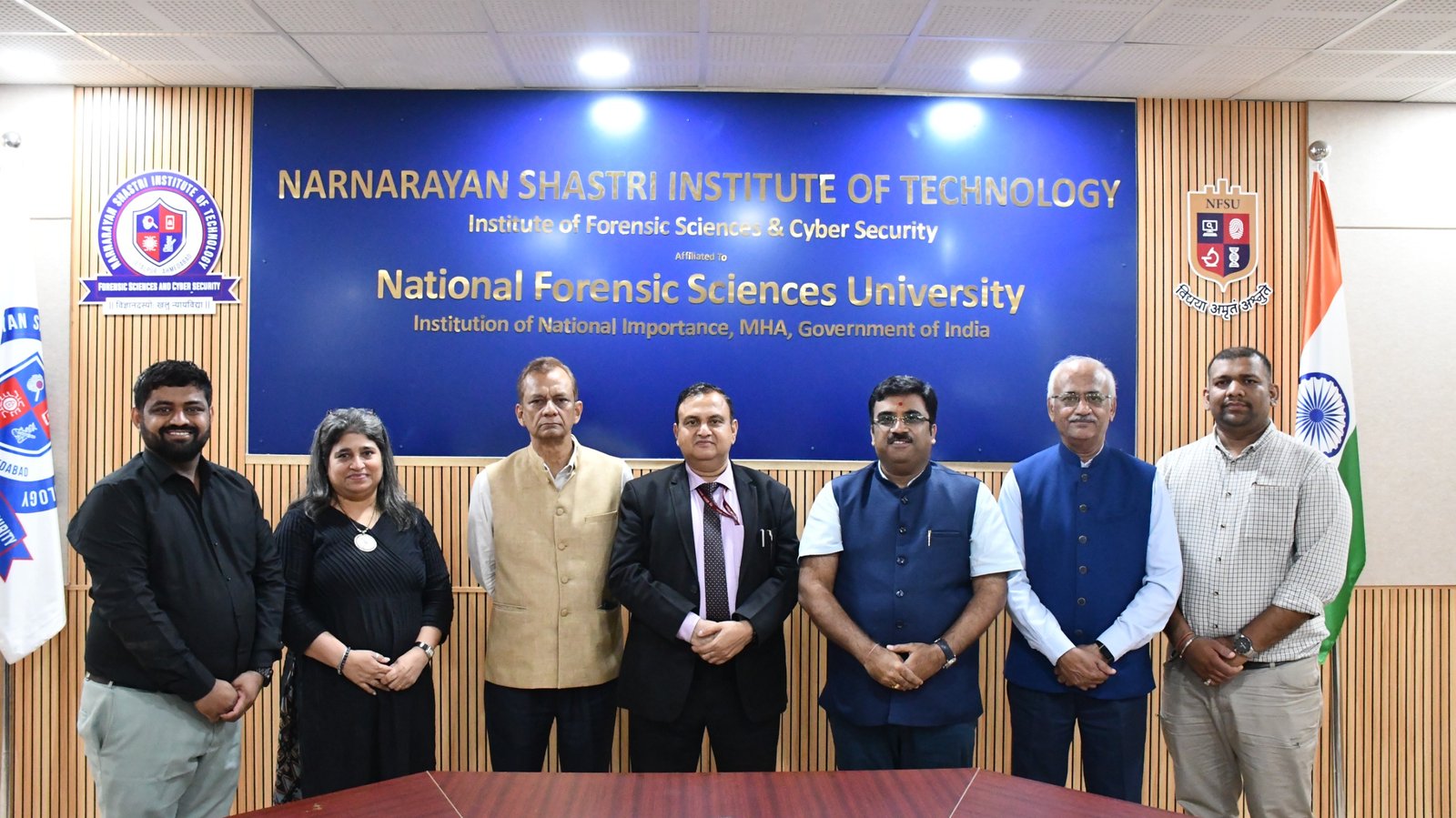
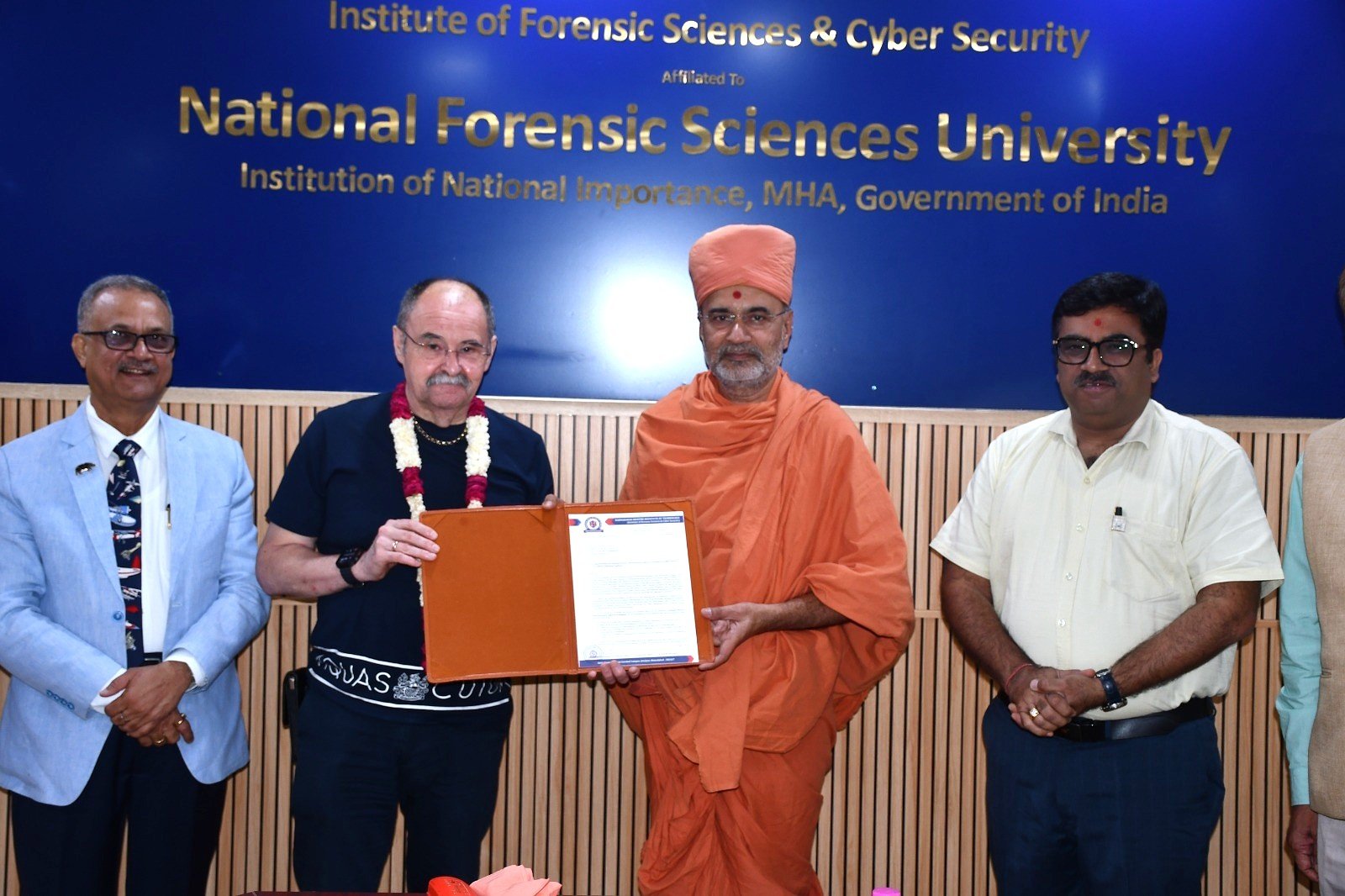
On 30th April 2025, NSIT-IFSCS hosted Prof. (Dr.) Robert Green, Professor of Forensic Science, University of Kent, U.K.
Prof. Robert Green is an accomplished forensic professional with several research publications to his credit.
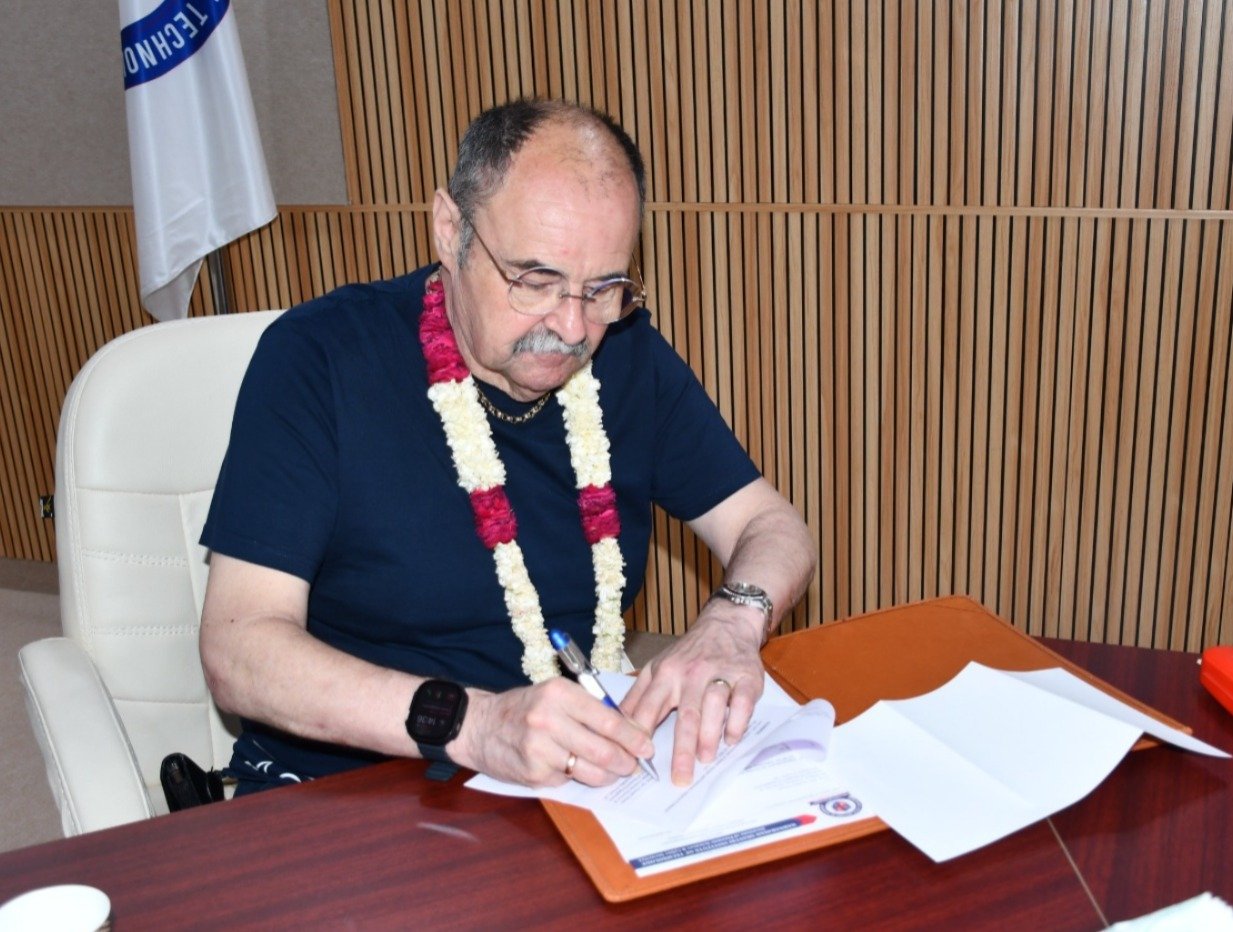
NSIT-IFSCS is proud to share that Dr. Robert Green has been appointed by NSIT-IFSCS as Global Advisor and Honorary Adjunct Professor.
This academic bonding will lead to excellent internship opportunities for NSIT-IFSCS students in the U.K., international collaborations in forensic science, and the promotion of forensic ethics.

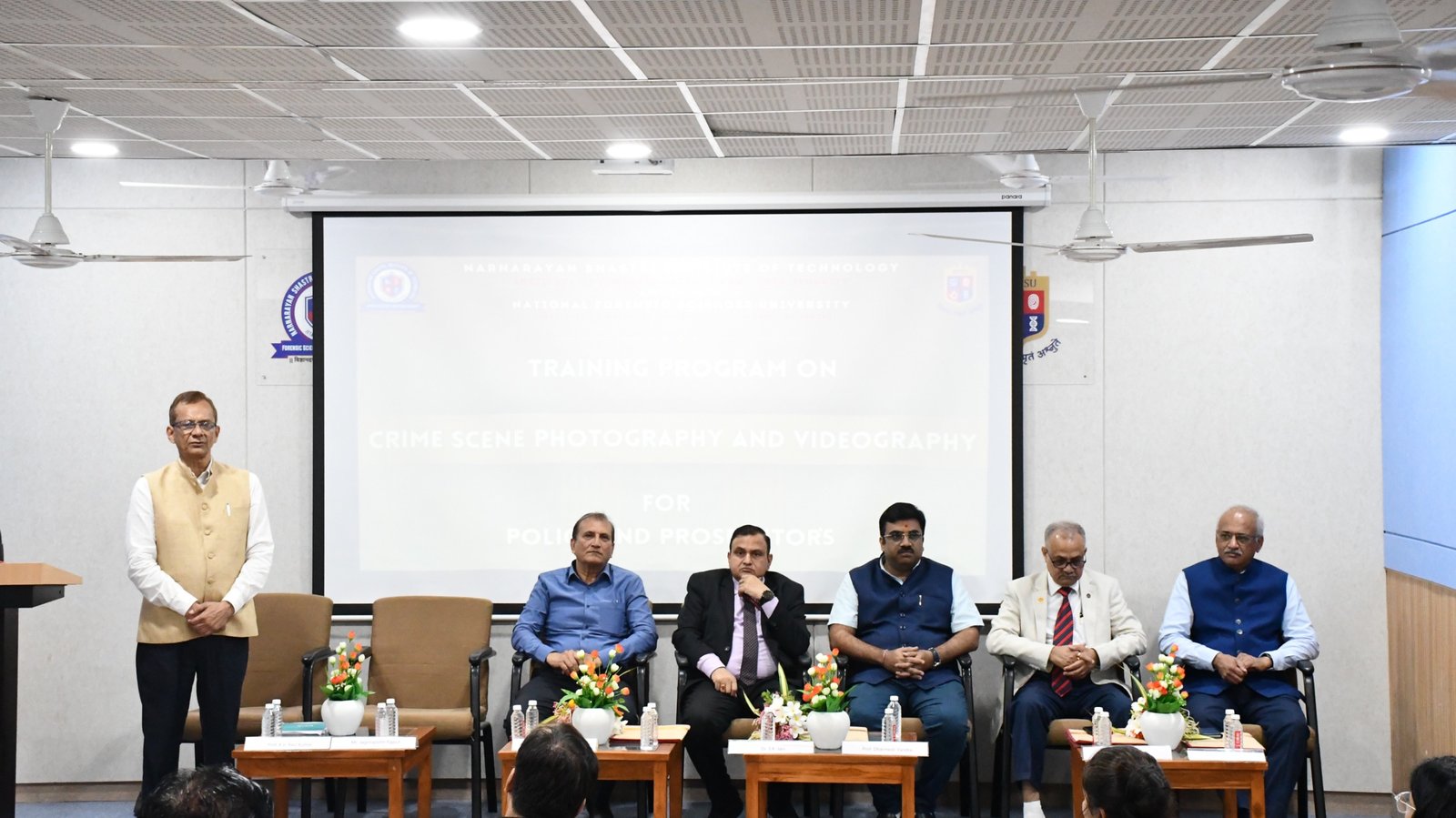
Training on Crime Scene Photography and Videography

Training on Crime Scene Photography and Videography

Date of Visit: 21 April 2025 to 25 April 2025
Location:  Narnarayan Shastri Institute of Technology (NSIT), Jetalpur, Ahmedabad

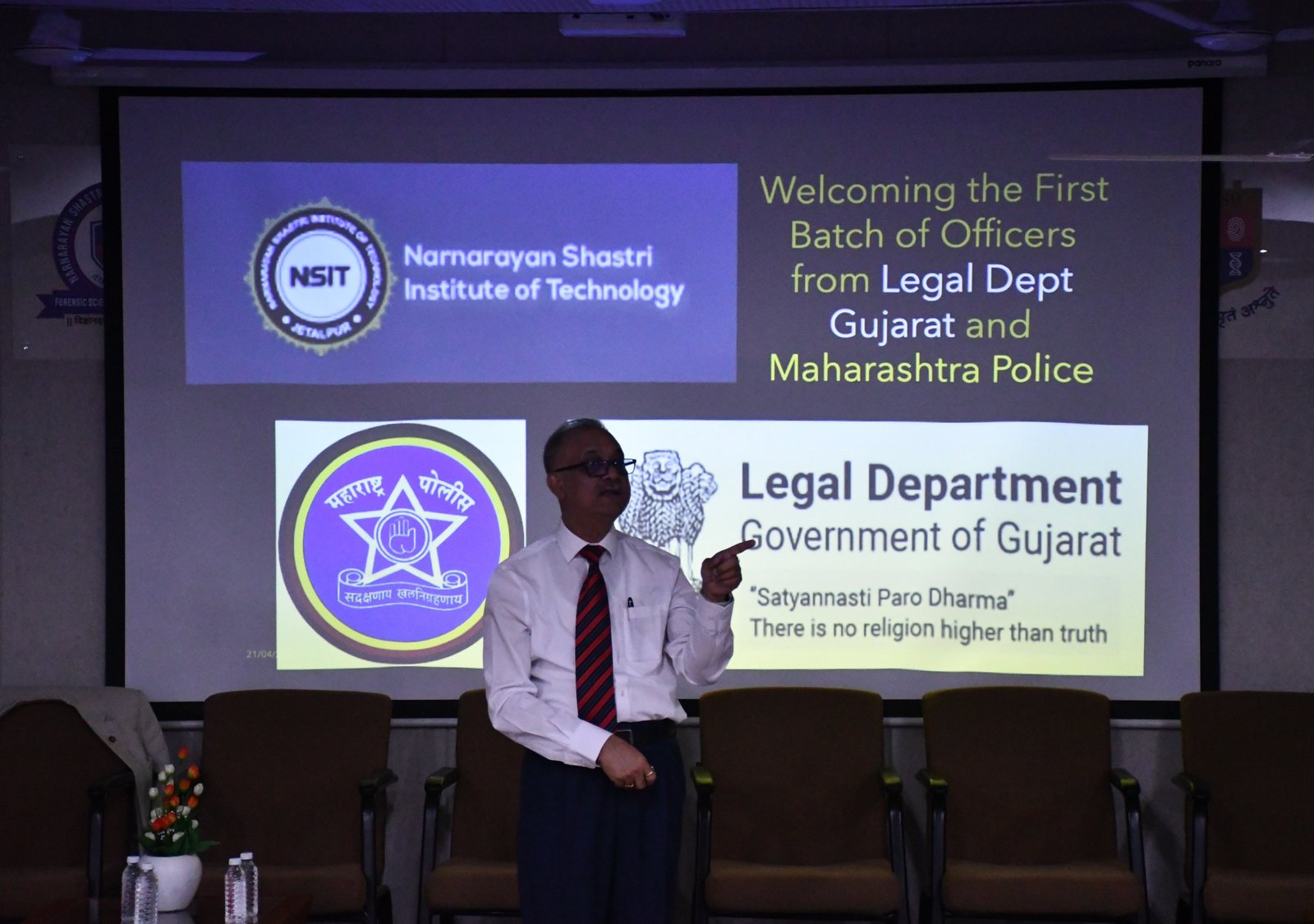
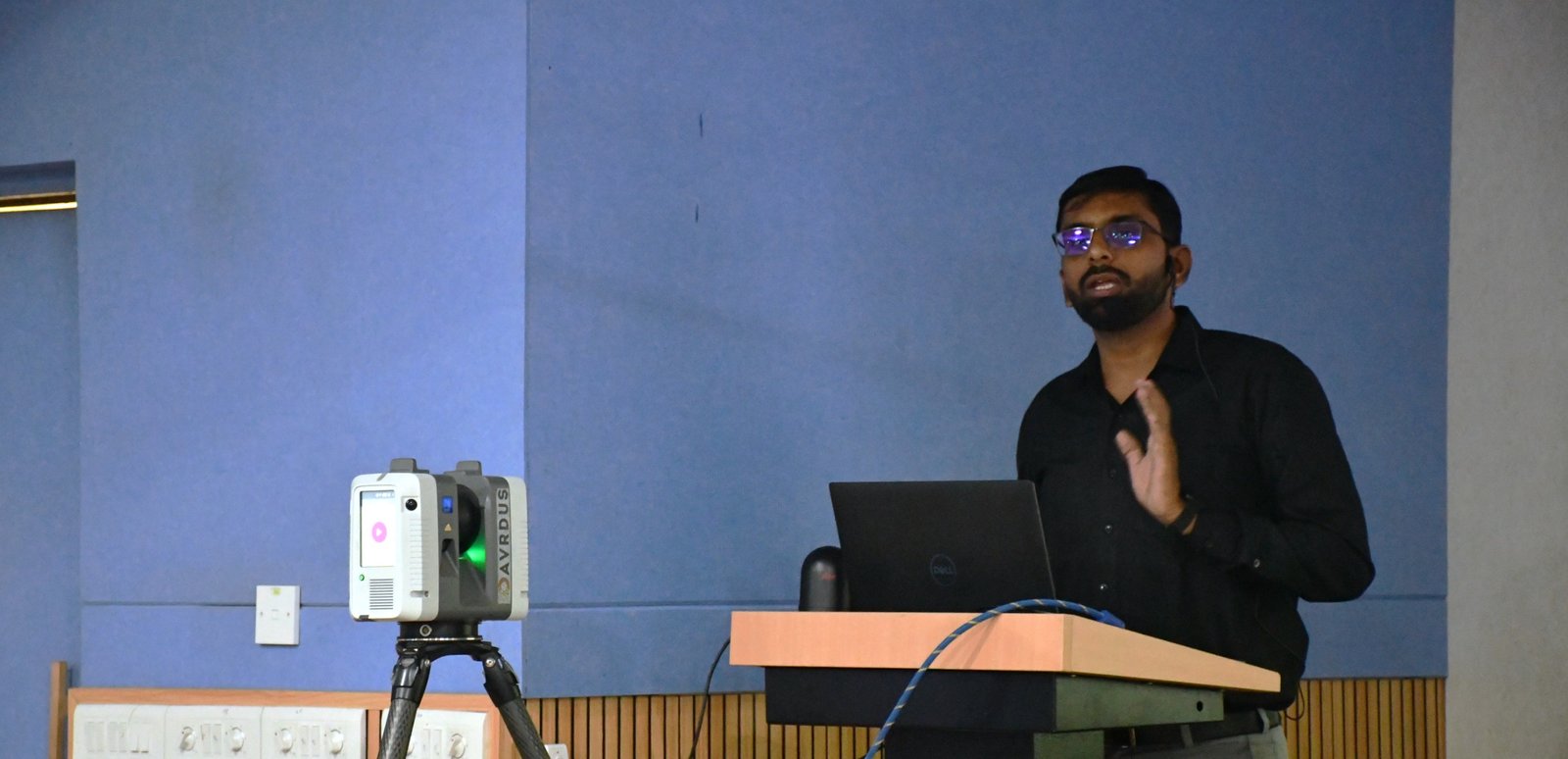
Narnarayan Shastri Institute of Technology (NSIT) hosted an inspiring Training on “Training on Crime Scene Photography and Videography”, from 21 April 2025 to 25 April 2025, featuring various experts like Dr. Keshav Kumar (retired IPS, BOG Member), Dr. Chandrakant Gajjar (retired Forensic Photographer, DFS Gandhinagar), Dr. Parvesh Sharma (Assistant Professor, NSIT), Ms. Grishma Pithiya (Assistant Professor, NSIT), Mr. Deep Kanakia (Airbots Aerospace), and Mr. Samar Shah (Kwick Soft Solutions).


Session Highlights:

The event began with a warm welcome for Dr. Keshav Kumar and Dr. S K Jain, who were received with a traditional tilak ceremony. Following the ceremonial lighting of the lamp, the Director of Training and Placement, Prof. Ravi K Kumar, delivered an inspiring speech, emphasizing the significance of the topic and introducing the notable achievements of the guest speaker.


Training topics covered a range of topics, including:

A specialized training program on Crime Scene Photography and Videography was conducted to equip forensic professionals, law enforcement personnel, and crime scene investigators with the technical and procedural knowledge
required to accurately capture and document crime scenes. The training emphasized both theoretical foundations and practical applications.


Improved Technical Skills:

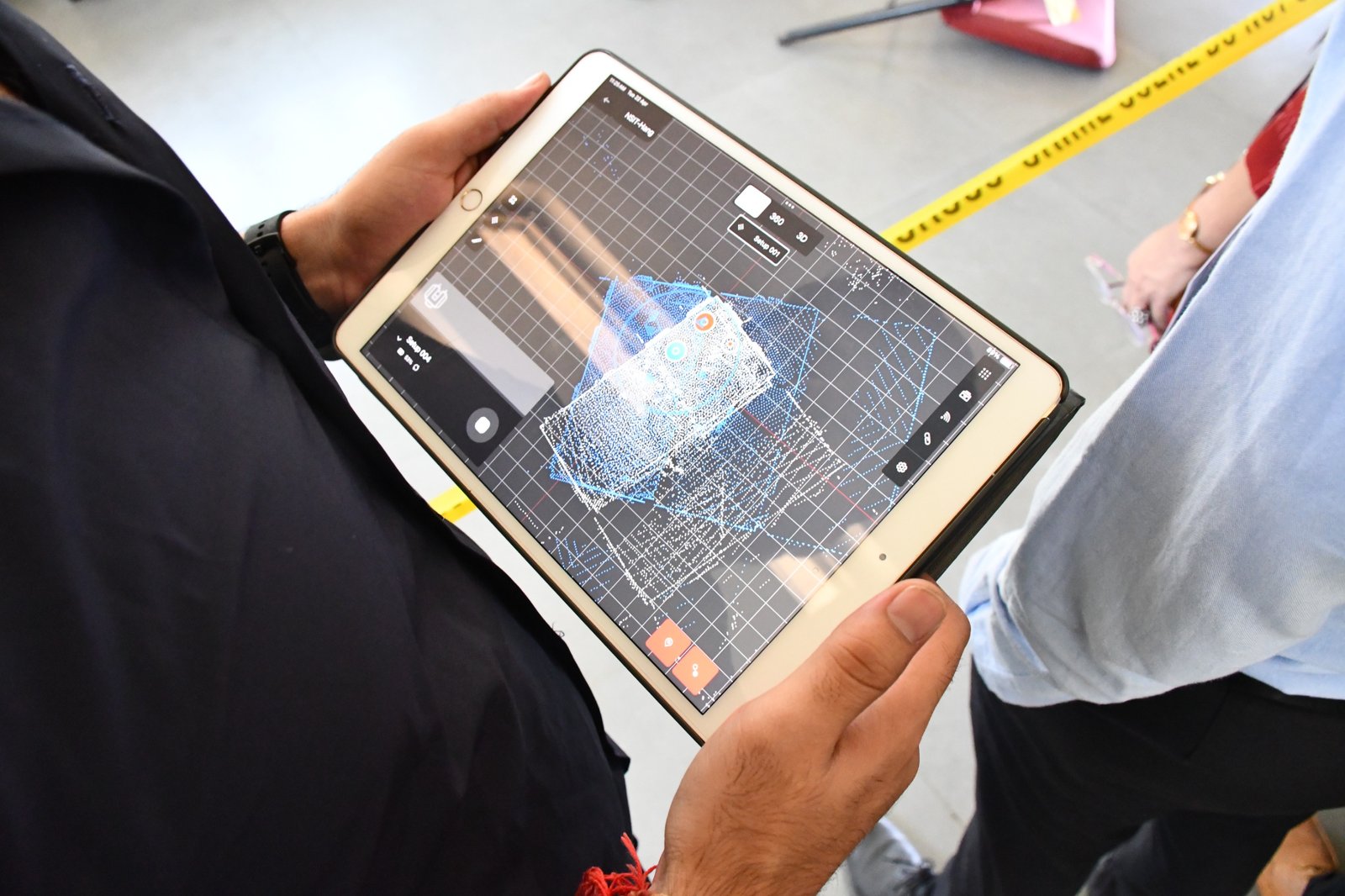
Participants gained hands-on experience with professional cameras, lighting techniques, and video recording methods,leading to significantly improved image quality and accuracy in evidence documentation.


Enhanced Scene Interpretation:

Trainees developed a keener eye for identifying critical evidence and understanding how best to capture it in different lighting, environmental, and spatial conditions.


Standardization of Processes:

The training introduced standardized protocols for photographing and filming crime scenes, ensuring consistency across various teams and departments.


Legal Admissibility of Evidence:

Proper documentation techniques learned during training directly contribute to maintaining the chain of custody and ensuring that visual evidence stands scrutiny in court.


Cross-Disciplinary Collaboration:

Participants from different agencies learned to coordinate more effectively during investigations, fostering improved communication between forensic teams, police, and legal personnel.


Audience and Participation:
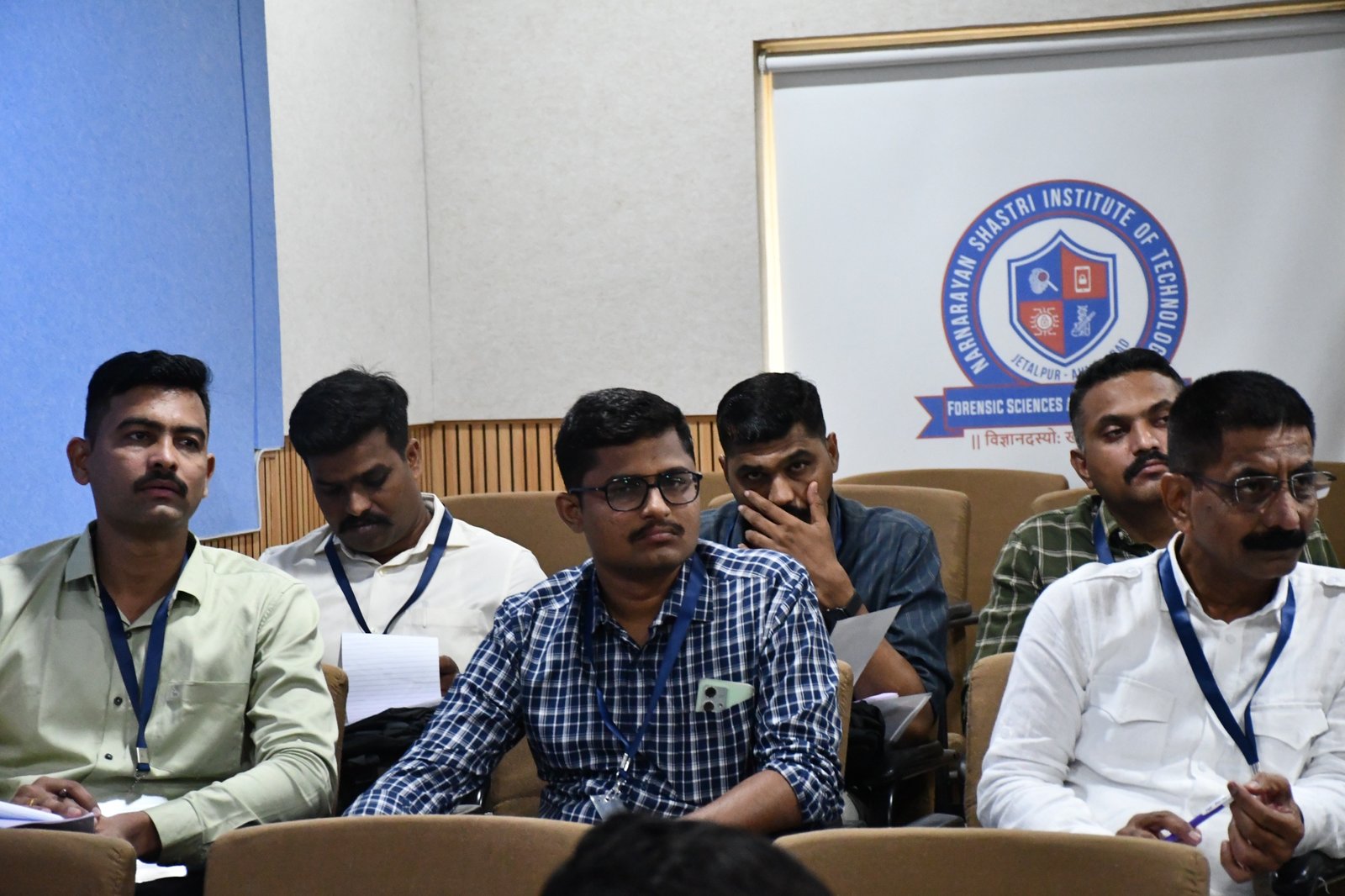
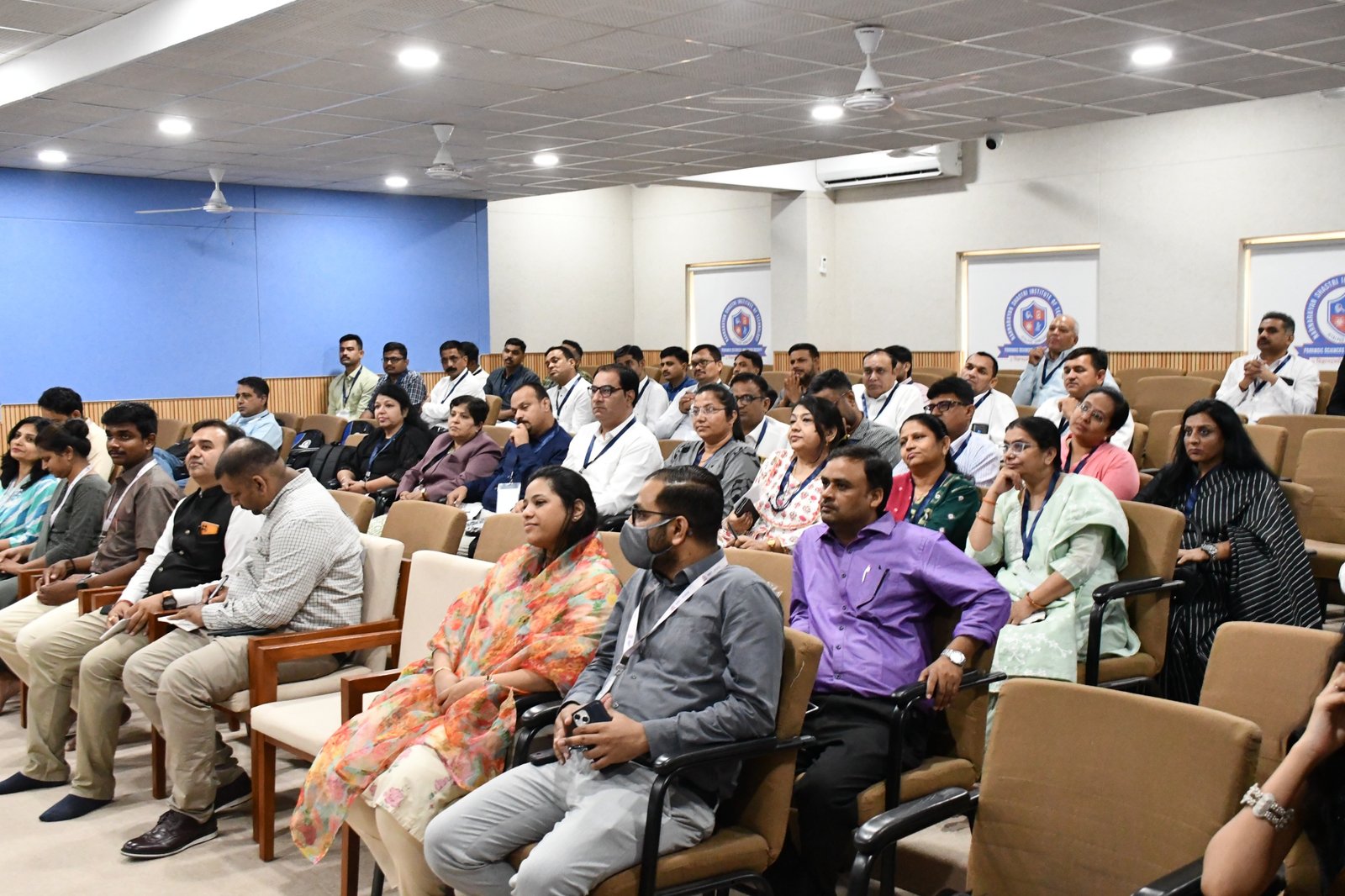
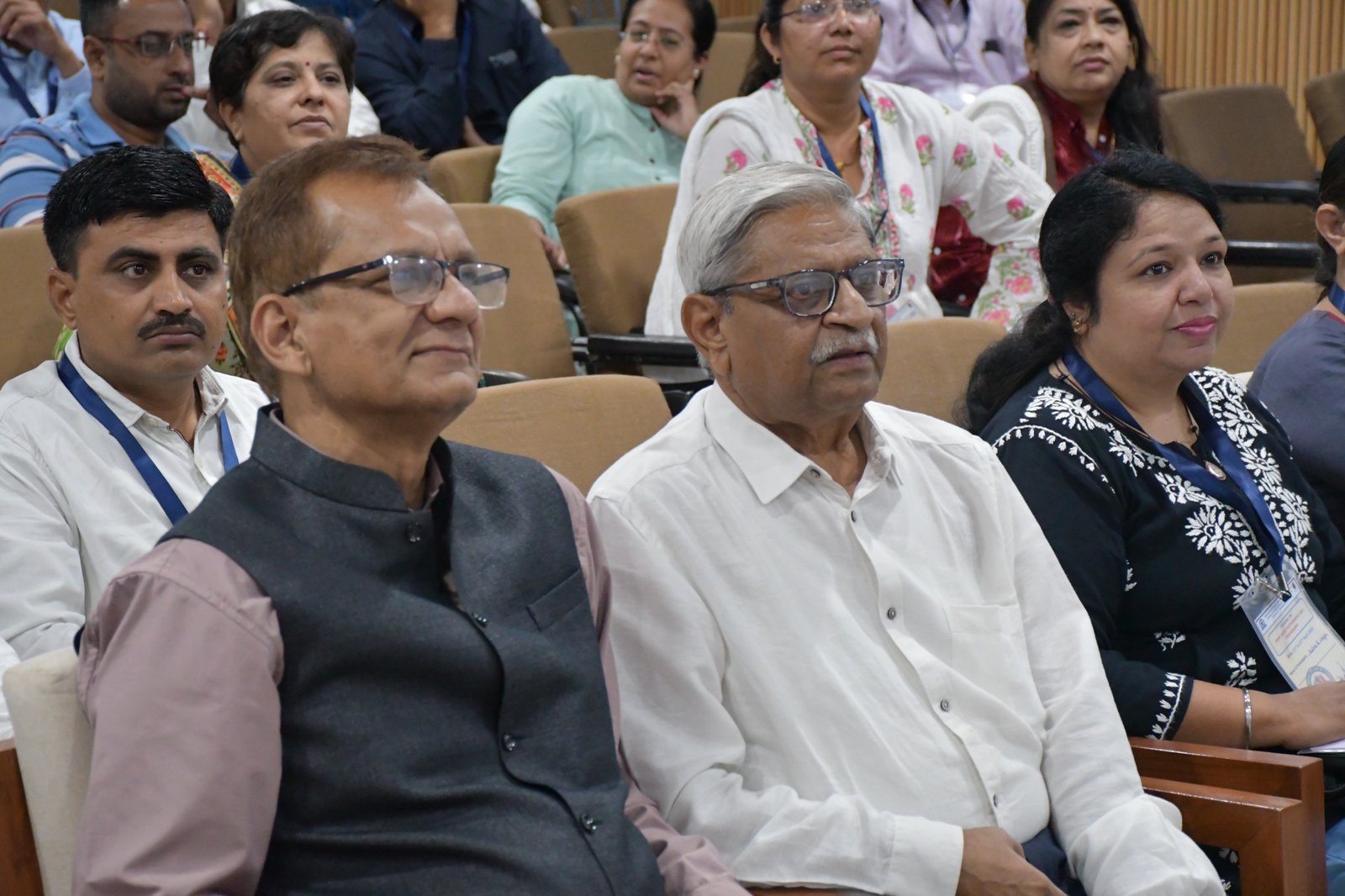
The event was attended by Maharashtra Police, Gujarat Police, Public Prosecutors and the Law Department officials, and faculty members from various departments. Attendees expressed their admiration for All Expert’s groundbreaking work and appreciated the depth of their sessions.


Recognition and Gratitude:
To honor Dr. Keshav Kumar, Dr. Chandrakant Gajjar’s contributions, Prof. Dr. Nikunj Brahmbhatt presented them with a bouquet and a memento as tokens of appreciation.


Impact and Takeaway:

Correct Use of Equipment:

Understanding camera settings (ISO, aperture, shutter speed) and how to use them effectively in different scenarios.

Photographic Documentation Techniques:

Systematic photographing from general views to close- ups with scale.

Videography Essentials:

Importance of narration, sequence, and angle to recreate the scene dynamically.

Preserving Evidence Integrity:

Learning how to document without contaminating or altering the crime scene.

Legal Standards:

Visual documentation must meet admissibility criteria in legal proceedings. NSIT continues its tradition of organizing such insightful events to inspire and educate its academic community.

Conclusion:

The Crime Scene Photography and Videography Training proved to be a highly impactful initiative. It significantly improved the competency of participants in documenting crime scenes with precision and legal sufficiency. The structured approach adopted in the training ensures better preservation, interpretation, and presentation of visual evidence. Moving forward, regular refresher sessions and advanced-level workshops are recommended to keep pace with evolving technologies and legal requirements.

Prepared By:
Ms. Hepi Suthar
Asst. Professor, NSIT-IFSCS

Date: 21.04.2025

EON AI Lab Inauguration

EON AI Lab Inauguration

Date of Visit: April 21, 2025
Location:  Narnarayan Shastri Institute of Technology (NSIT), Jetalpur, Ahmedabad

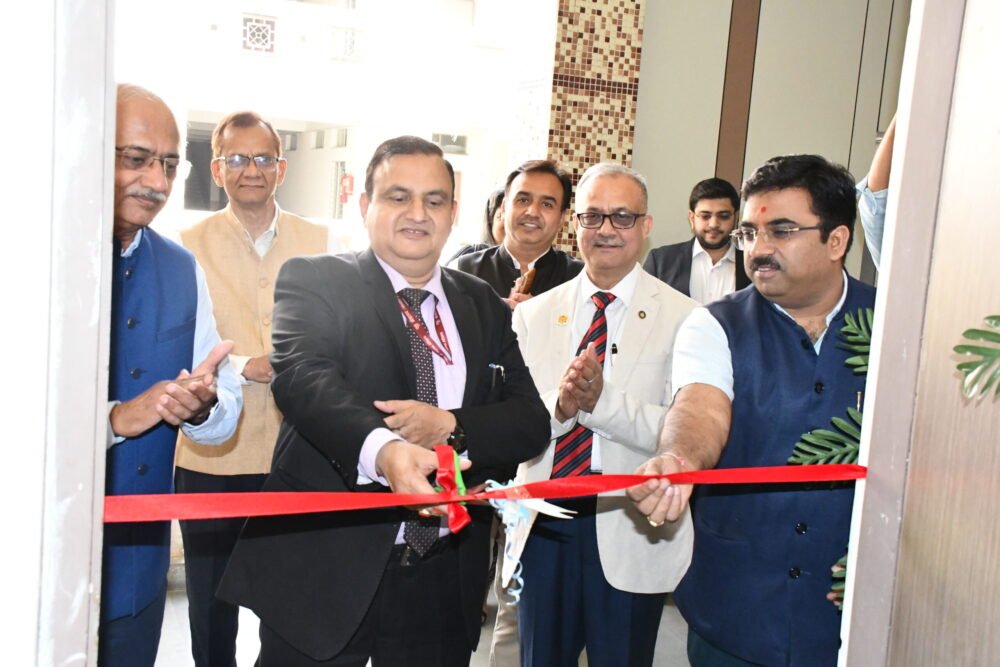
Narnarayan Shastri Institute of Technology (NSIT) hosted an Inauguration Ceremony on “EON AI Lab”, featuring Dr. S. K Jain (Director-cum-Chief Forensic Scientist, Director of Forensic Science Services, Ministry of Home Affairs, Government of India) and Dr. Keshav Kumar (retired IPS, BOG Member of NSIT).

Session Highlights:

The event began with a warm welcome for Dr. S. K. Jain and Dr. Keshav Kumar, who were received with a traditional tilak ceremony. Following the ceremonial lighting of the lamp, the Principal, Prof. Dr. Nikunj Brahmbhatt, delivered an inspiring speech, emphasizing the significance of the topic and introducing the notable achievements of the guest speaker.


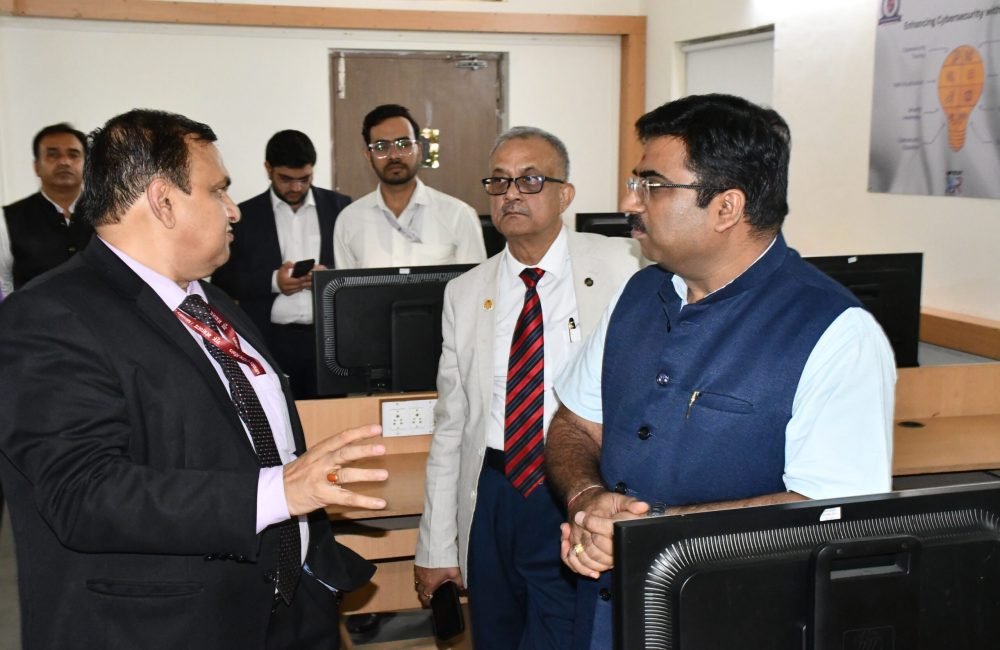
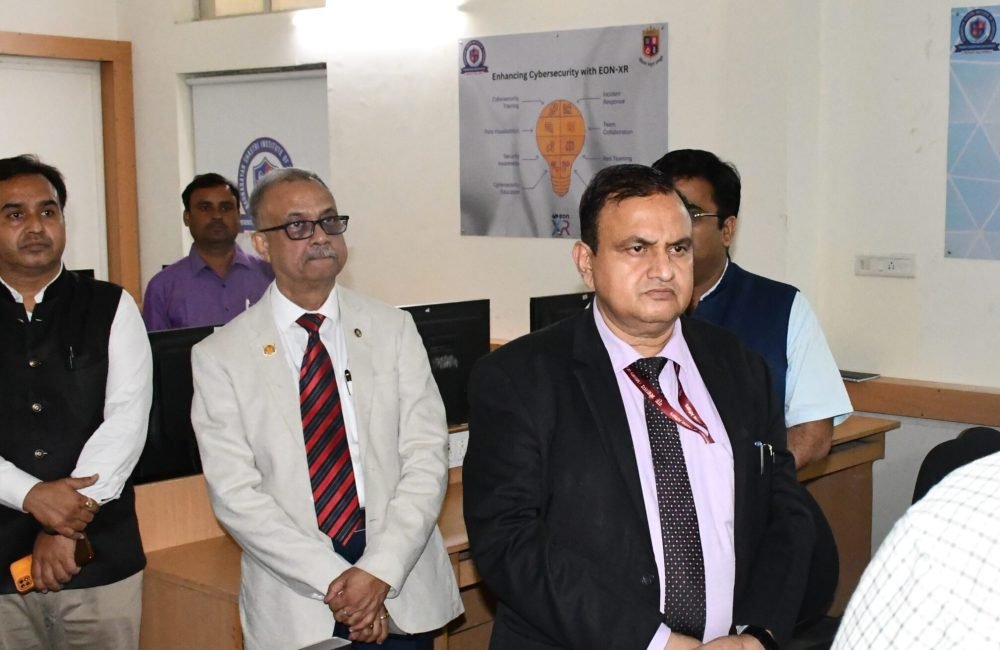
EON Lab Facilities: NSIT proudly inaugurates the EON AI Lab, marking a pivotal step toward academic and research excellence in Artificial Intelligence (AI) and advanced technology. The grand opening ceremony was honored by the presence of distinguished guests Dr. S.K. Jain and
Dr. Keshav Kumar, whose visionary leadership continues to shape the institution’s mission toward innovation, research, and interdisciplinary development.


Empowering Innovation: 

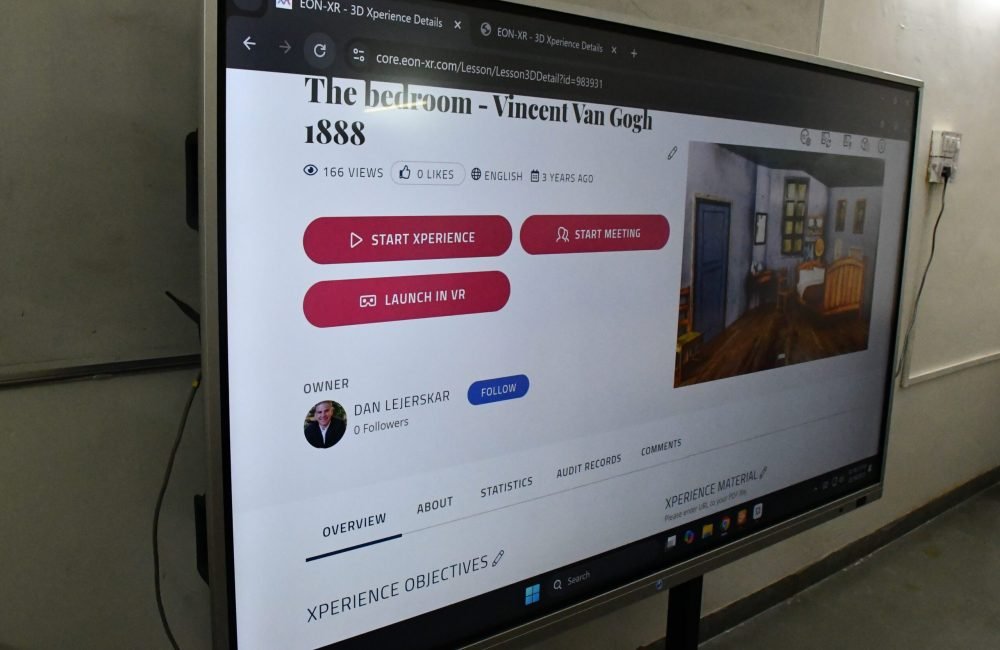
The lab provides a high-tech environment conducive to experimentation, thereby encouraging innovation in fields like machine learning, natural language processing, computer vision, and digital forensics.


Advancing Forensic AI:

A unique feature of the lab is its focus on AI in Forensic Science, enabling the development of smart tools for crime detection, forensic data analysis, virtual simulations, and digital evidence processing.


Skill Development and Employability:

Through hands-on exposure to real-world AI tools and datasets, students will enhance both their technical skills and soft skills, making them industry ready.


Research and Collaboration: 

The EON AI Lab is envisioned as a collaborative platform where academia, industry, and government can work together on high-impact projects that address current societal and technological challenges.


Audience and Participation: 

The event was attended by students and faculty members from various departments, including those pursuing Master’s and Bachelor’s programs in forensic science. Attendees expressed their admiration for Dr. S.K. Jain’s groundbreaking work and appreciated the depth of his session.


Recognition and Gratitude:

To honor Dr. Satish Kumar’s contributions Prof. Dr. Nikunj Brahmbhatt presented him with a bouquet, and a memento as tokens of appreciation.


Impact and Takeaway:

State-of-the-art Facility: The lab features modern computing infrastructure, AI development tools, and simulation software. Student-Centric Innovation: Students are placed at the heart of research, with mentorship opportunities and exposure to emerging technologies. Forensic-Tech Synergy: The lab pioneers the convergence of AI with forensic science, enabling breakthroughs in digital forensics, pattern recognition, and evidence analysis. Visionary Leadership: The support and guidance of leaders like Dr. S. K. Jain and Dr. Keshav Kumar have been instrumental in shaping this initiative. NSIT continues its tradition of organizing such insightful events to inspire and educate its academic community.


5 (2)
4 (2)
3 (3)
2 (4)

Conclusion:

The inauguration of the EON AI Lab at NSIT is more than a ceremonial event; it represents a strategic investment in the future of education, innovation, and interdisciplinary research. With its commitment to pushing the boundaries of Artificial Intelligence and its real-world applications in Forensic Science, the lab will serve as a launchpad for the next generation of AI pioneers, forensic experts, and thought leaders. This marks the beginning of a transformative journey, and NSIT stands at the forefront of reimagining technological possibilities for the greater good.

Prepared By:
Ms. Hepi Suthar
Asst. Professor, NSIT-IFSCS

Date: 21.04.2025

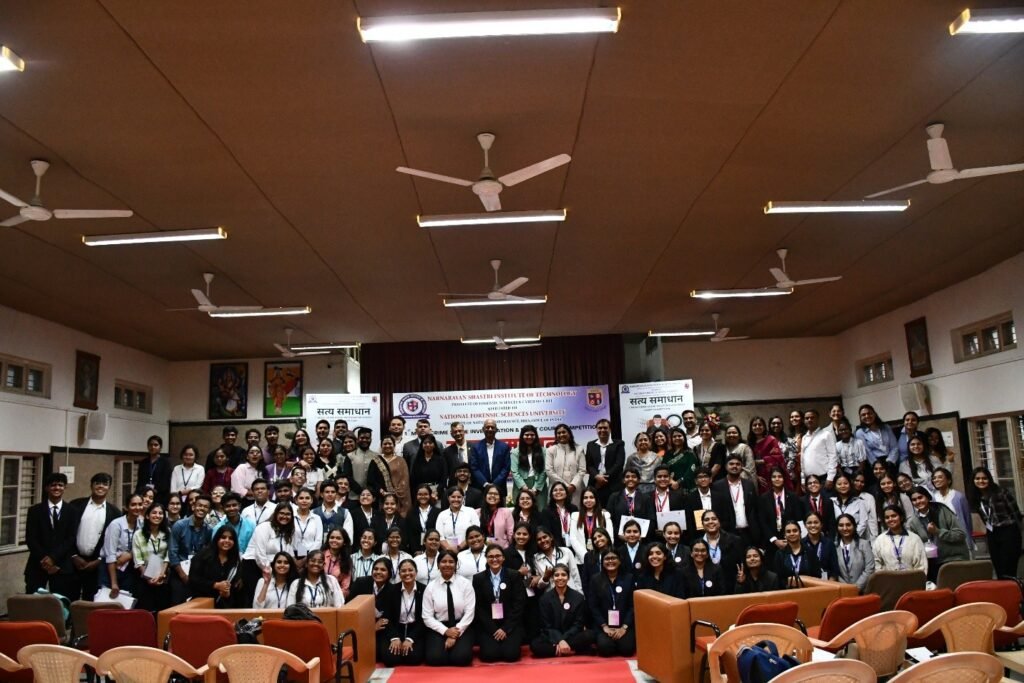
Event Report: Satya Samadhan – 1st Moot Court and Crime Scene Investigation Competition – 10th January ,2025

Venue: Narnarayan Shastri Institute of Technology – Institute of Forensic Science and Cyber Security (NSIT-IFSCS), Jetalpur, Ahmedabad, Gujarat

Event Overview

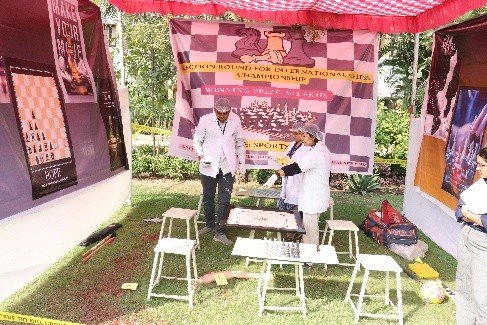
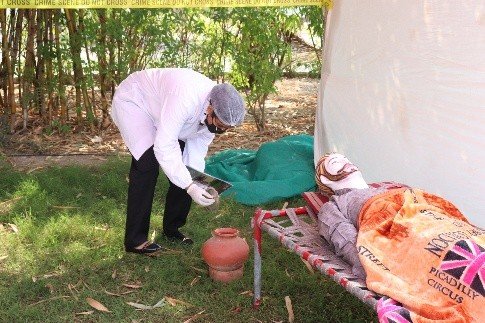
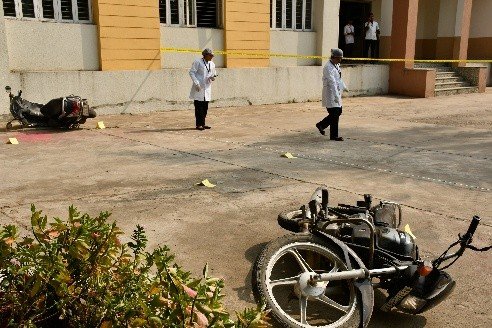
The Satya Samadhan – 1st Moot Court and Crime Scene Investigation Competition was successfully conducted on 10th January 2025 at NSIT-IFSCS, Jetalpur, Ahmedabad. The event aimed to provide students with a practical platform to showcase their forensic investigation and legal advocacy skills. Participants from universities across India took part, making it a truly competitive and intellectually stimulating event. The event witnessed the presence of Shri PP Swamiji, Managing Trustee of Narnarayan Shastri Institute of Technology, Mr. Dharmesh Vandra, Vice President of NSIT-IFSCS, Prof. (Dr.) Nikunj Brahmbhatt, Principal of NSIT-IFSCS, Prof. K.V Ravikumar, Director-Training and Consultancy NSIT-IFSCS and Esteemed faculty members from NSIT-IFSCS. The student along with the guidance of the faculty members, created 10 Mock Crime Scene in the campus which included various mock cases relating to Murder, Suicide by hanging, Document Forgeries, Vehicle accident, Poisoning, Murder followed by Corpse mutilation, Black Magic, Rape & Murder etc. which was used for the competition purpose.

Competition Structure

The event was divided into two sections:

  • Round 1: Crime Scene Investigation (CSI) Round – 25 registered teams participated in this round. Each team was tasked with examining a simulated crime scene, collecting evidence, and preparing a forensic report.
  • Round 2: Moot Court Competition – Based on the performance in the CSI round, 8 shortlisted teams advanced to the Moot Court round, where they presented legal arguments based on forensic findings before an esteemed panel of judges.

Judging Panel

The event was graced by renowned experts in forensic science and law, including:

  • Dr. Ranjeet Singh – Managing Director, SIFS
  • Dr. Surbhi Mathur – Associate Professor and Associate Dean at the School of Forensic Science
  • Ms. Riva Pocha – Founder of FACTS (Forensic Advice Consultancy & Training Services)
  • Ms. Nikita Opal – Legal Expert

Audience and Participation

The event witnessed participation from leading forensic and law institutions across India. Students from NFSU Gandhinagar, Gujarat University, Karnavati University, and other prestigious institutions actively competed, showcasing their expertise in forensic science and legal arguments. The audience included faculty members, legal professionals, and forensic experts who provided valuable insights and feedback to the participants.

Winners and Prizes

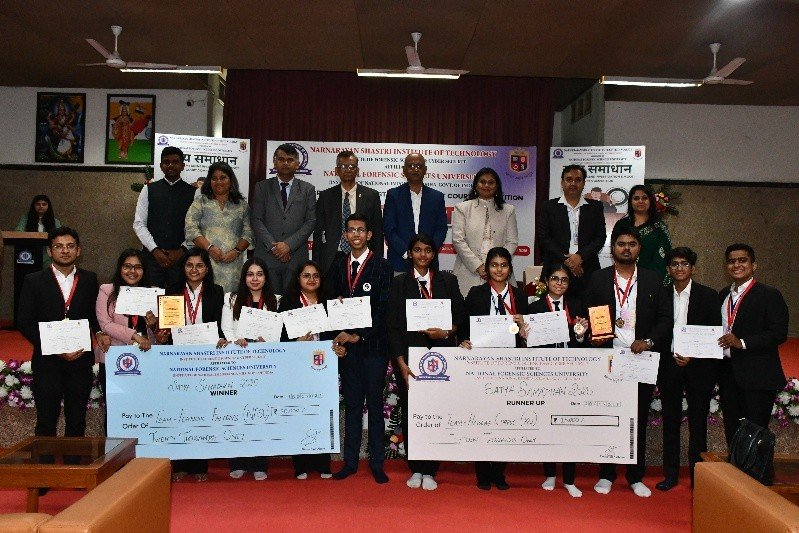
  • First Prize (₹20,000): Students from NFSU Gandhinagar
  • Second Prize (₹15,000): Students from Karnavati University

Event Highlights

Hands-on Crime Scene Investigation – Participants experienced a real-time crime scene scenario.
Engaging Moot Court Rounds – Students presented forensic evidence in a court-like setup.
Expert Evaluations – Judges provided critical feedback on forensic methodologies and legal arguments.
Networking Opportunities – Students interacted with industry experts and peers from various universities.

Impact and Takeaways

The event successfully bridged the gap between forensic science and legal proceedings, helping students enhance their practical investigative skills. It also emphasized the importance of evidence-based justice, critical thinking, and the role of forensic science in the legal system. The competition encouraged teamwork, analytical reasoning, and legal advocacy skills among students, reinforcing their commitment to pursuing excellence in forensic science and law.

Highlights in Pictures

Conclusion

The Satya Samadhan – 1st Moot Court and Crime Scene Investigation Competition was a grand success, leaving a lasting impact on participants and audiences alike. The competition not only tested students’ forensic and legal skills but also provided them with valuable exposure to real-world crime scene investigations and courtroom procedures. NSIT-IFSCS looks forward to hosting future editions of this prestigious event, furthering its mission to promote forensic education and legal awareness.

DATE: 04/02/2025

Prepared by:

Mr. Aaromal Venugopal

Assistant Professor(NSIT-IFSCS)

Ganesh Chaturthi (19th Sep 2023)

Ganesh Chaturthi is a Hindu festival dedicated to the worship of Lord Ganesha, we take pride in embracing the cultural diversity for NSIT.


  • Program Highlights:

The Ganesh Sthapana celebration featured a variety of cultural and religious activities

  1. Ganesh Sthapana: A beautifully eco-friendly crafted idol of Lord Ganesha was installed in a specially decorated shrine. The idol represented Lord Ganesha’s divine presence. The Puja was performed by our Honourable Principal (Dr). Nikunj Bhrahmbhatt with faculty, staff and students.
  2. Prayers and Aarti: Students and faculty members including Vice-President and Principal gathered to offer prayers, bhajans and aarti to seek Lord Ganesha’s blessings.


  • Eco-friendly Initiative:

In line with the growing concern for environmental conservation, NSIT emphasized the use of eco-friendly materials for the idol and decorations. The idol was crafted from biodegradable materials.


At Conclusion The Ganesh Sthapana celebration at NSIT was a beautiful manifestation of our commitment to celebrationg diversity, culture and religious traditions. It not only provided an opportunity for students to engage in religious and cultural rituals but also promoted a sense of unity and understanding among our diverse student body.

REPORT ON PROGRAMME HELD AT OUR INSTITUTE

  1. Orientation Programme (21st Aug 2023)

The Orientation Programme is an essential component of welcoming new students to our institute, providing them with vital information, and helping them integrate into the academic community equipping them with essential information and fostering a sense of belonging. The orientation program at our institute serves as a crucial step in ensuring that new students start their academic journey with confidence and enthusiasm. We are committed to continually enhancing our orientation program to meet the evolving needs of our diverse student body. 

The Institute of Forensic Sciences and Cyber Security at Narnarayan Shastri Institute of Technology (NSIT) has started its first batch with four courses and so the orientation programme named ‘Diksharambh’ was held on 21st August 2023 at 11 a.m. in the seminar hall of NSIT. The students came with their parents and the programme was graced with the presence of Vice President – Prof. Dharmesh Vandra, Principal – Prof. (Dr.) Nikunj Brahmbhatt and Campus Director – Prof. Sanjay Sharma. The programme started with the Saraswati Vandana prayer. The programme was anchored by Dr. Hiral Sanghavi, course coordinator of B.Sc.- M.Sc. Forensic Science. She briefed about the history of Narnarayan Shastri Institute of Technology (NSIT), its mission and its importance with respect to the affiliation with the esteemed National Forensic Sciences University (NFSU) – Ministry of Home Affairs, Govt. of India. The vision of NSIT and its importance was narrated by        Dr. Geeta Gupta, course coordinator of M.Sc. Forensic Science. She also briefed and oriented about the various courses under the Institute of Forensic Sciences & Cyber Security of NSIT to the students and parents.

2. Onam Celebration (29th August 2023)

Onam, a prominent festival celebrated in the Indian state of Kerela, holds immense cultural and social significance. It marks the harvest season and is celebrated with enthusiasm and zeal.

At our institute, students from South India organized a vibrant Onam celebration to uphold their cultural traditions and share the joy of this festival with the entire campus community.

  • Program Highlights
  1. Pookkalam (Flower Rangoli): The campus was adorned with beautiful Pookkalam, intricate flower Rangoli designs, created by students, showcasing their artistic skills.
  2. Traditional Attire: Students and faculty embraced the occasion by wearing traditional Kerala attire, including elegant white sarees for women and Mundus for men.
  3. Cultural Performances: Students presented captivating cultural performances, including classical dances, traditional folk dances, and melodious songs.
  4. Games and Competitions: Fun-filled games and competitions, such as tug of war, boat races, etc added excitement to the celebration.

3. Delegations from Germany as Special Guests Visited our Institute (3rd 2023)

Academic collaboration and the exchange of knowledge across international borders are essential components of modern education. In this context, our institute had the privilege of hosting a distinguished professor from Germany as a part of an academic exchange program.

Prof. Dr. Frank Walter and Prof. Dr. Reiner Creutzburg from SRH Berlin University of Applied Science, Germany Visited our institute as a special guest on 3rd September 2023.

  • Purpose of Visit

The primary purpose of the visit was to promote academic and research collaboration between our institute and esteemed institutions in Germany. The professor’s visit aimed to:

  • Facilitate knowledge exchange and discussions on research projects and academic initiatives.
  • Foster cultural and academic understanding between students and faculty members.
  • Explore opportunities for joint research projects, workshops, and academic partnerships.


  • Activities during the Visit:
  • Student Interaction: Dr. Frank Walter and Dr. Reiner Creutzburg engaged with students in informal sessions, sought advice, and broadened their perspectives on Forensic science and Cyber Security.
  • Academic Networking: The visit included interactions with other faculty members, researchers and experts in relevant fields to establish academic connections.
  • Research Collaboration Discussion: Meetings and discussions were held with faculty members to explore potential research collaborations and joint projects.


At conclusion, The visit of Prof. Dr. Frank Walter and Prof. Dr. Reiner Creutzburg from SRH Berlin University of Applied Science from Germany was a significant milestone in strengthening our institute’s academic connections and enriching the educational experience of our students and faculty members. It exemplifies our commitment to fostering global academic partnerships and promoting cultural exchange. We look forward to future collaborations and visits that will continue to elevate the academic excellence of our institution.

4. Teachers’ Day (5th September 2023)

Teachers’ Day is a special occasion dedicated to honoring the dedicated educators who play a pivotal role in shaping the future of students. At our institute, we believe in acknowledging the invaluable contributions of our faculty members. It was a day of appreciation, recognition, and camaraderie that contributed to a positive and harmonious academic environment.


  • Program Highlights:

The Teachers’ Day celebration was a day-long event that featured a variety of activities and gestures to honor our teachers.

  1. Formal Assembly: The day began with a formal assembly where students gathered to pay tribute to their teachers. The institute leadership also addressed the gathering, emphasizing the importance of educators in society.
  2. Students Performances: Students organized various cultural performances, including songs, dances, and skits, to entertain and celebrate their teachers.
  3. Felicitation Ceremony: Distinguished teachers were felicitated and presented with tokens of appreciation for their exceptional contributions to education.
  4. Interactive sessions: Informal sessions were held where students could share their thoughts, experiences and personal anecdotes with their teachers.


  • Students Involvement

The Teachers’ Day celebration was primarily organized by students, with active participation from various student committees. Students took on the responsibility of planning and executing the event to ensure its success.

At conclusion, We remain committed to continuing this tradition and fostering a culture of respect and gratitude towards our teachers.


5. Janmashtami (6th Sep 2023)

In our Institute, we recognize the cultural diversity of our student body and encourage the celebration of various festivals, including Janmashtami.


  • Program Highlights:

The Janmashtami celebration was a vibrant event that showcased various cultural performances and traditional rituals.

  1. Decorations: The campus was adorned with vibrant decorations, including flowers and rangoli creating a festive atmosphere.
  2. Krishna Idol: A beautifully decorated idol of Lord Krishna, representing his divine childhood form, was placed in a specially decorated shrine.
  3. Matki Phod: A Matki was suspended normally above the ground, filled with curd and butter. Students with faculty members enthusiastically attempted to break the pot blindfolded, reminiscent of Krishna’s playful nature.                               

In conclusion Janmashtami celebration at our institute to our commitment to celebrating diversity and cultural heritage.

6. Ganesh Chaturthi (19th Sep 2023)

Ganesh Chaturthi is a Hindu festival dedicated to the worship of Lord Ganesha, we take pride in embracing the cultural diversity for NSIT.


  • Program Highlights:

The Ganesh Sthapana celebration featured a variety of cultural and religious activities

  1. Ganesh Sthapana: A beautifully eco-friendly crafted idol of Lord Ganesha was installed in a specially decorated shrine. The idol represented Lord Ganesha’s divine presence. The Puja was performed by our Honourable Principal (Dr). Nikunj Bhrahmbhatt with faculty, staff and students.
  2. Prayers and Aarti: Students and faculty members including Vice-President and Principal gathered to offer prayers, bhajans and aarti to seek Lord Ganesha’s blessings
  • Eco-friendly Initiative:

In line with the growing concern for environmental conservation, NSIT emphasized the use of eco-friendly materials for the idol and decorations. The idol was crafted from biodegradable materials.


At Conclusion The Ganesh Sthapana celebration at NSIT was a beautiful manifestation of our commitment to celebrationg diversity, culture and religious traditions. It not only provided an opportunity for students to engage in religious and cultural rituals but also promoted a sense of unity and understanding among our diverse student body.

7. Lord Ganesh Visarjan: (23nd Sep 2023)

Ganesh Visarjan, the immersion of Lord Ganesha idols in water bodies, marks the culmination of the Ten-day Ganesh Chaturthi festival. At NSIT, we believe in embracing cultural traditions while also being environmentally conscious.


  • Program Highlights:
  1. Cultural Performances – Students presented cultural performances, including dances and songs, celebrating the spirit of Lord Ganesha.
  2. Participation and Engagement – The Ganesh Visarjan event witnessed enthusiastic participation from Honorable Principal Prof. Dr. Nikunj Bhrambhatt, faculty, staff with students. It provided an opportunity for students from different cultural backgrounds to come together and appreciate the significance of the ritual while emphasizing environmental responsibility.
  3. Religious Rituals– The immersion ceremony included the chanting of prayers and bhajans, invoking Lord Ganesha’s blessings.

    In conclusion, The Ganesh Visarjan event at NSIT was a harmonious blend of tradition and environmental responsibility. It served as a treatment for our commitment to celebrating cultural diversity while respecting the environment. We remain dedicated to promoting eco-friendly practices during festivals and fostering cultural understanding within our diverse students.

  1. National Forensic Sciences University, Gandhinagar Visit (6th Sep 2023)

Educational tours are a valuable aspect of the learning experience, providing students with the opportunity to gain real-world exposure to academic institutions and foster a deeper understanding of their field of study.

  • Tour Highlights:
  1. NFSU Campus Tour – The visit commenced with a guided tour of the NFSU campus, including visits to various Centres of Excellence of Narcotics Drugs and Substances, Ballistics Range, Behavioural Sciences, Food Testing and Dopping Test laboratory, Cyber Defense Centre, DNA Fingerprinting, libraries, laboratories, classrooms and other academic programs.
  2. Interactions with NFSU faculty- There was an opportunity for students to engage in discussions with professors and academic advisors, facilitating academic and career guidance.

REPORT ON VISIT TO B.J. MEDICAL COLLEGE, AHMEDABAD FOR POST-MORTEM AUTOPSY

REPORT ON VISIT TO B.J. MEDICAL COLLEGE, AHMEDABAD FOR POST-MORTEM AUTOPSY

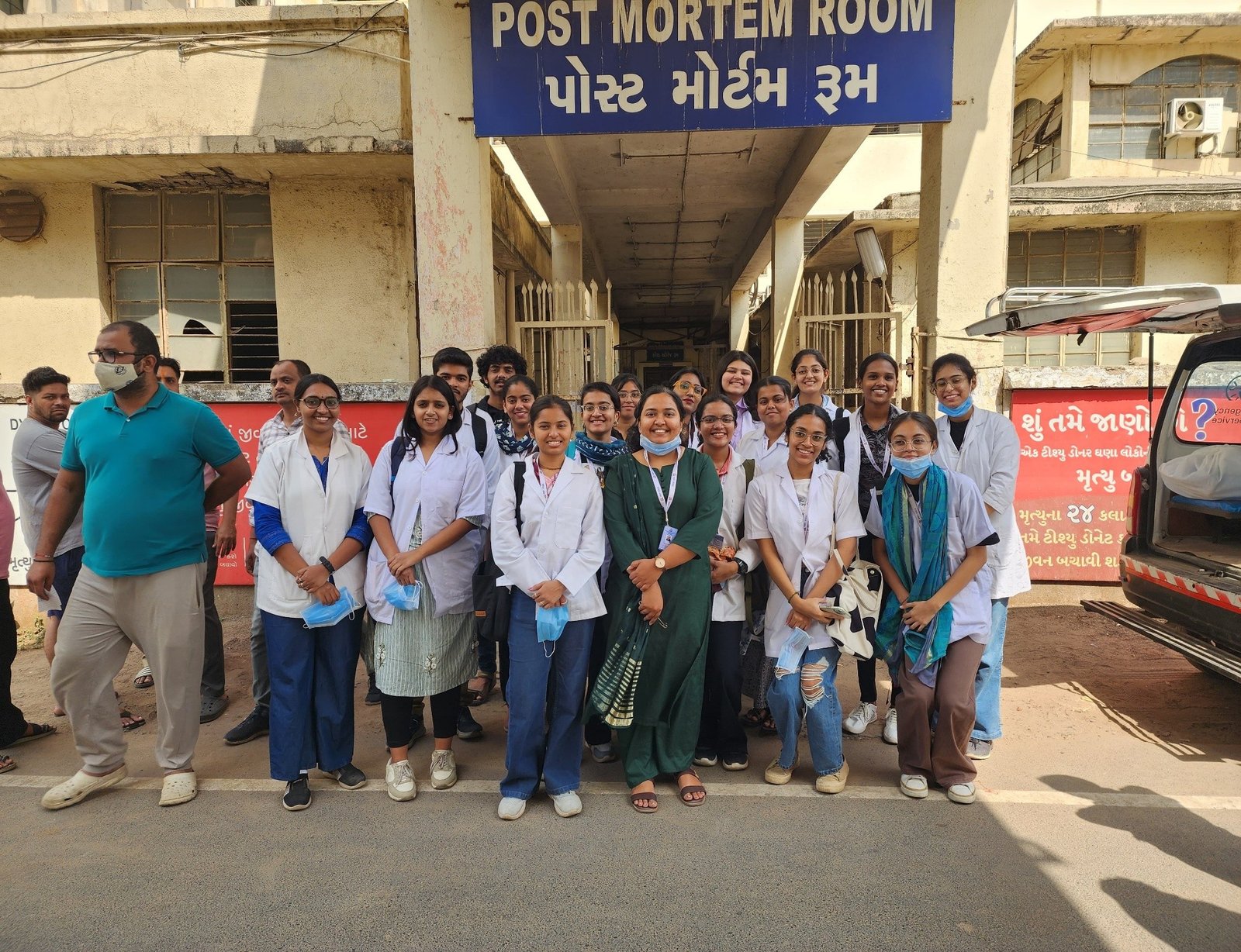
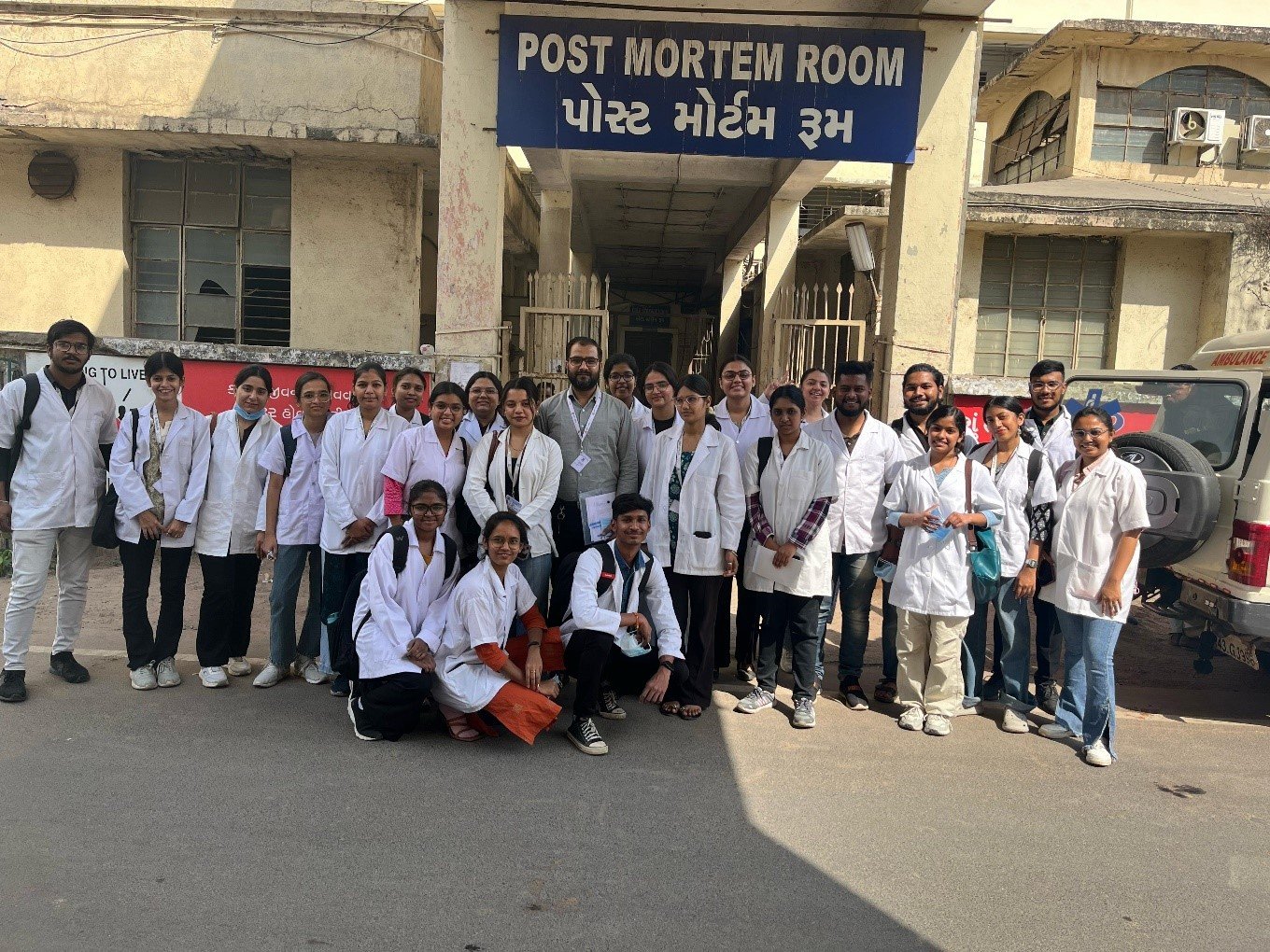
Date of Visit: 21st February 2025
Institute: Narnarayan Shastri Institute of Technology – Institute of Forensic Science & Criminal Studies (NSIT-IFSCS), Jetalpur
Course & Semester: B.Sc. Forensic Science, Semester IV
Number of Students: 18
Venue: Department of Forensic Medicine, B.J. Medical College, Ahmedabad

The objective of the Visit:

The purpose of this educational visit was to provide the students of B.Sc. Forensic Science with practical exposure to post-mortem procedures and forensic autopsy techniques. This visit aimed to enhance their understanding of medico-legal investigation, cause of death determination, and trauma analysis.

Details of the Post-Mortem Autopsy:

  • Decedent: Unidentified male body
  • Cause of Death: Brain haemorrhage
  • Types of Haemorrhage Observed:
    • Subdural haemorrhage
    • Subarachnoid haemorrhage
  • Additional Observations:
    • Fractures in the tibia and fibula
    • Bleeding from the nose
  • Suspected Case Type: Hit-and-run accident


Observations and Learning Outcomes:

  1. Post-Mortem Procedure: The students observed the systematic examination of the body, including external and internal assessments performed by forensic experts.
  2. Head Injuries and Trauma Analysis: The presence of subdural and subarachnoid haemorrhages provided insight into fatal head injuries and their forensic significance.
  3. Skeletal Injuries: The fracture of the tibia and fibula was analyzed in relation to the impact trauma, indicating the severity of the accident.
  4. External Signs of Trauma: The students noted bleeding from the nose, a common indicator of severe cranial trauma.
  5. Forensic Implications of a Hit-and-Run Case: The significance of medico-legal investigation in hit-and-run cases was discussed, including the role of forensic pathologists in assisting legal proceedings.
  6. Post-Mortem Changes and P.M. Note: The doctors provided a detailed explanation of post-mortem changes such as rigor mortis, livor mortis, and decomposition. They also elaborated on the significance of the post-mortem report (P.M. Note), ensuring that students understood its importance in medico-legal cases.
  7. Hands-on Experience: The students were given the opportunity to handle and observe internal organs, allowing them to gain practical experience in understanding anatomical structures and pathological changes.

Visit to the Forensic Medicine Museum:

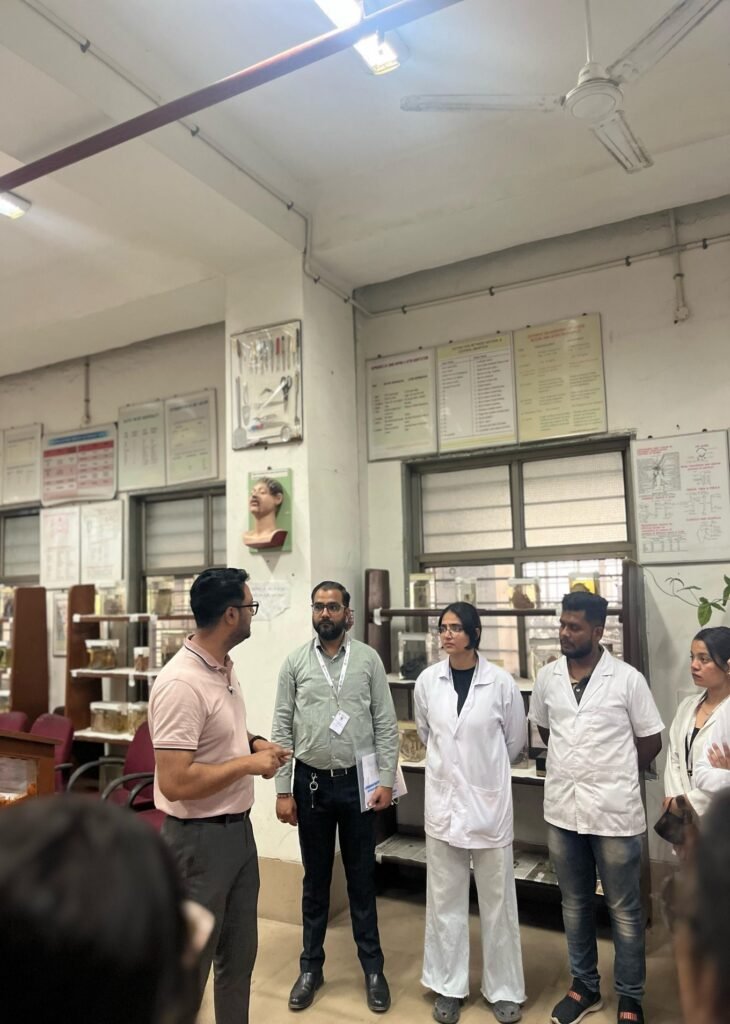
In addition to observing the autopsy, the students also visited the Department of Forensic Medicine’s Museum. The museum houses informative wall pieces detailing symptoms of various types of death. Additionally, the museum features an array of weapons, including both sharp and blunt objects, used to illustrate the injuries they can inflict. The students also had the opportunity to examine various human bones, including specimens from both male and female skeletal structures, enhancing their anatomical understanding.


Conclusion:

The visit to the Department of Forensic Medicine at B.J. Medical College provided an invaluable opportunity for students to witness a real-life forensic autopsy. It enhanced their practical knowledge and analytical skills regarding post-mortem procedures, trauma evaluation, and cause of death determination. The session helped bridge theoretical learning with hands-on forensic exposure, significantly contributing to their academic and professional growth.

Photos from the visit are attached in Annexure I.

Acknowledgment:

We extend our gratitude to the doctors and staff of the Forensic Medicine Department, B.J. Medical College, Ahmedabad, for their guidance and informative session. Special thanks to the faculty members and coordinators of NSIT-IFSCS for organizing this insightful visit.

Submitted by:
Ms. Grishma Pithiya
Assistant Professor (TA),
NSIT-IFSCS,

Jetalpur, Ahmedabad.

B.J. MEDICAL COLLEGE, AHMEDABAD FOR POST-MORTEM AUTOPSY VISIT On 19th February 2025

Date of Visit: 19th February 2025
Institute: Narnarayan Shastri Institute of Technology – Institute of Forensic Science & Criminal Studies (NSIT-IFSCS), Jetalpur
Course & Semester: M.Sc. Forensic Science, Semester II
Number of Students: 26
Venue: Department of Forensic Medicine and Toxicology, B.J. Medical College, Ahmedabad


The objective of the Visit:

The purpose of this educational visit was to provide the students of M.Sc. Forensic Science with practical exposure to post-mortem procedures and forensic autopsy techniques. This visit aimed to enhance their understanding of medico-legal investigation, cause of death determination, and trauma analysis.


Details of the Post-Mortem Autopsy:

  • Decedent: Identified male body
  • Cause of Death: Accidental Death due to Brain haemorrhage
  • Types of Haemorrhage Observed: Subarachnoid haemorrhage

Observations and Learning Outcomes:

  1. Post-Mortem Procedure: The students observed the systematic examination of the body, including external and internal assessments performed by forensic experts.
  2. Head Injuries and Trauma Analysis: The presence of subarachnoid haemorrhages provided insight into fatal head injuries and their forensic significance.
  3. Post-Mortem Changes and P.M. Note: The doctors provided a detailed explanation of post-mortem changes such as rigor mortis, livor mortis, and decomposition. They also elaborated on the significance of the post-mortem report (P.M. Note), ensuring that students understood its importance in medico-legal cases.
  4. Hands-on Experience: The students were given the opportunity to handle and observe internal organs, allowing them to gain practical experience in understanding anatomical structures and pathological changes.

Visit to the Forensic Medicine Museum:

In addition to observing the autopsy, the students also visited the Department of Forensic Medicine’s Museum. The museum houses informative wall pieces detailing symptoms of various types of death. Additionally, the museum features an array of weapons, including both sharp and blunt objects, used to illustrate the injuries they can inflict. The students also had the opportunity to examine various human bones, including specimens from both male and female skeletal structures, enhancing their anatomical understanding.


Conclusion:

The visit to the Department of Forensic Medicine at B.J. Medical College provided an invaluable opportunity for students to witness a real-life forensic autopsy. It enhanced their practical knowledge and analytical skills regarding post-mortem procedures, trauma evaluation, and cause of death determination. The session helped bridge theoretical learning with hands-on forensic exposure, significantly contributing to their academic and professional growth.


Acknowledgment:

We extend our gratitude to the doctors and staff of the Forensic Medicine Department, B.J. Medical College, Ahmedabad, for their guidance and informative session. Special thanks to the faculty members and coordinators of NSIT-IFSCS for organizing this insightful visit.

19th February 2025

Prepared By:
Dr. Harjeet Singh
Asst. Professor
NSIT-IFSCS

Highlights in Pictures

The Power of Nanostructures Enabling Ultra-Sensitive and Reproducible Compound Detection Visit on – 17th February 2025

Date of Visit: February 17, 2025

Location: Narnarayan Shastri Institute of Technology (NSIT), Jetalpur, Ahmedabad

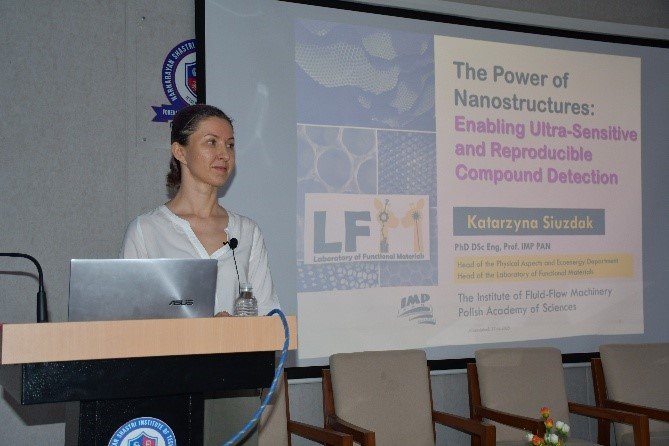
Narnarayan Shastri Institute of Technology (NSIT) hosted an inspiring Expert Talk on “The Power of Nanostructures Enabling Ultra-Sensitive and Reproducible Compound Detection, featuring PhD D.Sc Eng. Dr. Katarzyna Siuzdak, Associate Professor from The Institute of Flued Flow Machinery. Polish Academy of Science Poland.

Session Highlights:
The event began with a warm welcome for Dr. Katarzyna Siuzdak, who was received with a traditional tilak ceremony. Following the ceremonial lighting of the lamp, the Principal, Prof. Dr. Nikunj Brahmbhatt, delivered an inspiring speech, emphasizing the significance of the topic and introducing the notable achievements of the guest speaker.

Dr. Katarzyna Siuzdak’s talk covered a range of topics Nanostructures are emerging as key enablers in the detection of chemical compounds at ultra-sensitive levels. Their unique properties, such as large surface area, tunable size, and high reactivity, make them ideal candidates for improving detection sensitivity and ensuring reproducibility in various applications, including environmental monitoring, healthcare diagnostics, and industrial processes. This session explores the latest advancements in nanostructure-based technologies and how they are transforming the field of compound detection. She discussed emerging career opportunities in cyber forensics, emphasizing the growing demand for skilled professionals in fields like:

  • Fundamentals of Nanostructures: Understanding the inherent properties of nanomaterials, such as quantum effects and surface plasmon resonance, which contribute to their enhanced sensing capabilities.
  • Design and Fabrication: A look into the cutting-edge design principles and fabrication techniques that enable the creation of highly sensitive and reproducible nanosensors.
  • Applications Across Sectors: Real-world case studies demonstrating how these advanced sensors are used in fields like medical diagnostics, environmental monitoring, and food safety.
  • Challenges and Future Directions: Discussing the hurdles in achieving scalability, cost-effectiveness, and long-term stability for commercial applications, and what the future holds for nanostructure-based compound detection.

In this expert talk, attendees delve into how nanostructures are revolutionizing the way we detect compounds at unprecedented levels of sensitivity and reliability. Nanomaterials exhibit extraordinary properties that enable the detection of even trace amounts of chemical compounds with high precision. By manipulating the size, shape, and surface characteristics of nanostructures, researchers can create sensors that outperform traditional detection methods in both sensitivity and specificity.

Audience and Participation:
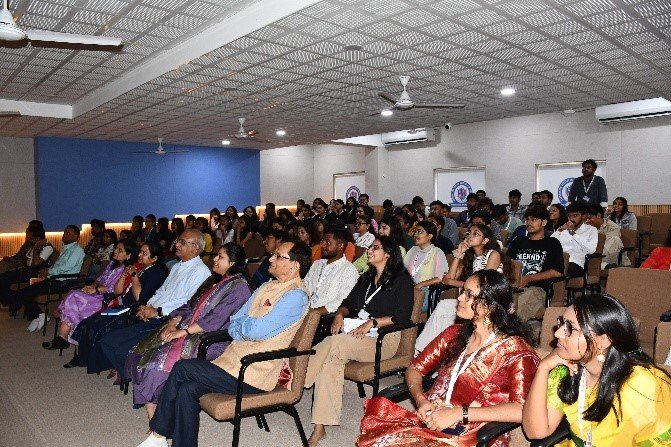
The event was attended by students and faculty members from various departments, including those pursuing Master’s and Bachelor’s programs in forensic science. Attendees expressed their admiration for Dr. Katarzyna Siuzdak’s groundbreaking work and appreciated the depth of his session.

Recognition and Gratitude:
To honor Dr. Katarzyna Siuzdak’s contributions Prof. Dr. Nikunj Brahmbhatt presented him with a bouquet, and a memento as tokens of appreciation.

Impact and Takeaway:
This session will provide valuable insights for anyone interested in the intersection of nanotechnology and chemical sensing, offering both technical knowledge and a vision of where this rapidly evolving field is headed.

NSIT continues its tradition of organizing such insightful events to inspire and educate its academic community.
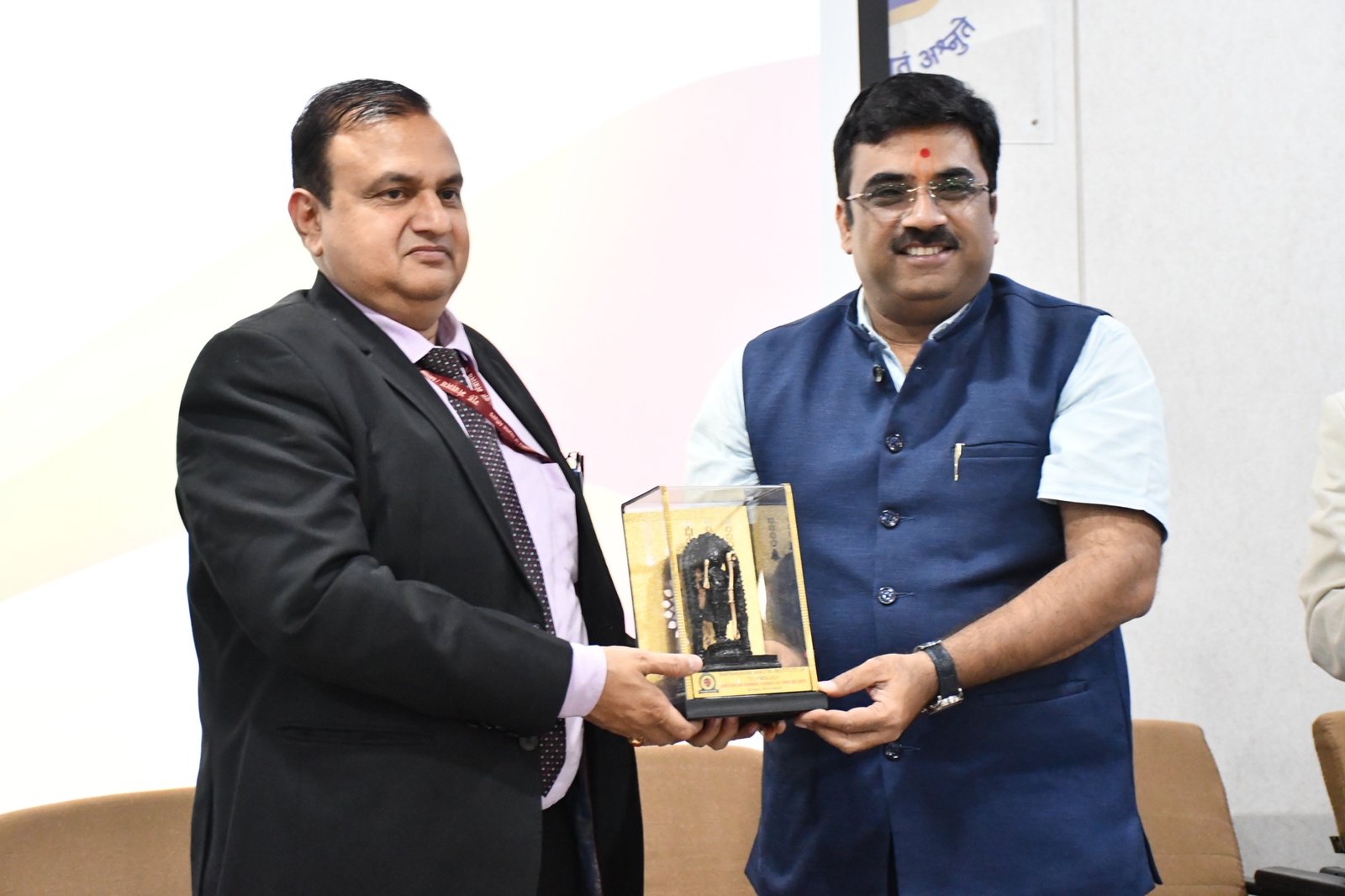
Highlights in Pictures

Conclusion:

The event concluded with a group photo session at the venue’s entrance, allowing students, volunteers, and faculty members to interact with the guests. A networking lunch followed, offering participants the opportunity to engage in informal discussions with Dr. Katarzyna Siuzdak.
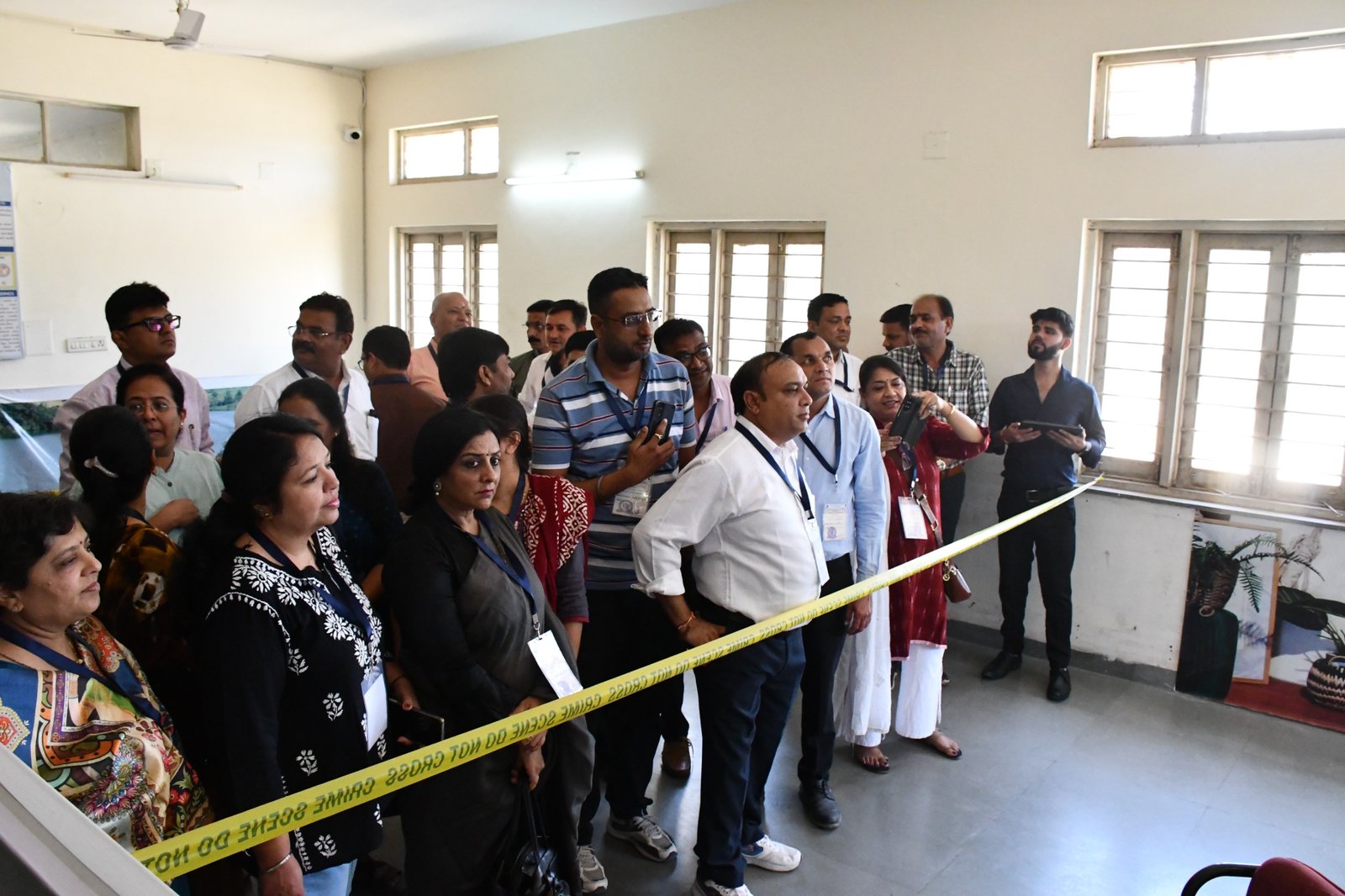
 

Date: 20.02.2024

Prepared By:
Miss Hepi Suthar
Asst. Professor, NSIT-IFSCS
loader