
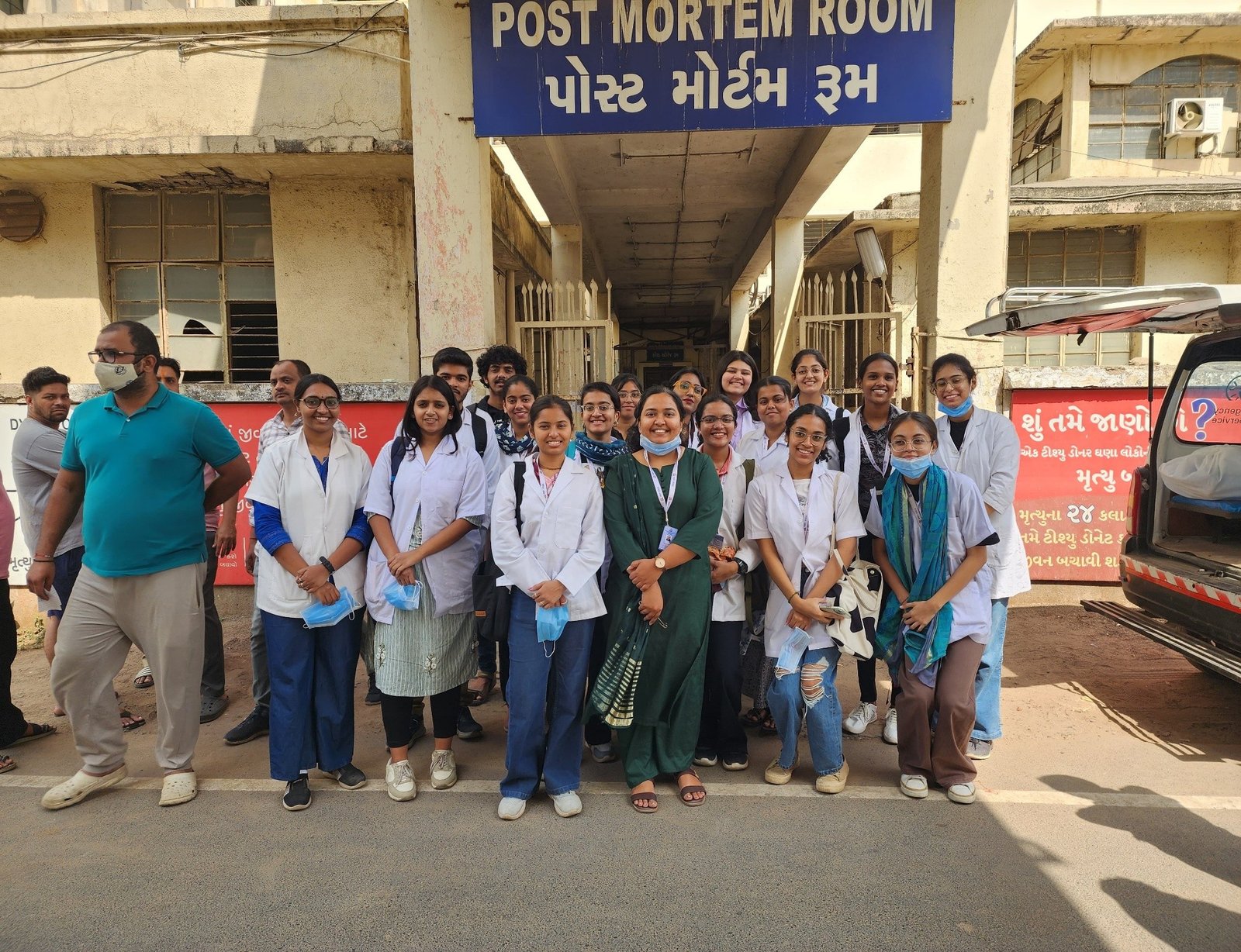

REPORT ON VISIT TO B.J. MEDICAL COLLEGE, AHMEDABAD FOR POST-MORTEM AUTOPSY
Date of Visit: 21st February 2025
Institute: Narnarayan Shastri Institute of Technology – Institute of Forensic Science & Criminal Studies (NSIT-IFSCS), Jetalpur
Course & Semester: B.Sc. Forensic Science, Semester IV
Number of Students: 18
Venue: Department of Forensic Medicine, B.J. Medical College, Ahmedabad
The objective of the Visit:
The purpose of this educational visit was to provide the students of B.Sc. Forensic Science with practical exposure to post-mortem procedures and forensic autopsy techniques. This visit aimed to enhance their understanding of medico-legal investigation, cause of death determination, and trauma analysis.
Details of the Post-Mortem Autopsy:
- Decedent: Unidentified male body
- Cause of Death: Brain haemorrhage
- Types of Haemorrhage Observed:
- Subdural haemorrhage
- Subarachnoid haemorrhage
- Additional Observations:
- Fractures in the tibia and fibula
- Bleeding from the nose
- Suspected Case Type: Hit-and-run accident
Observations and Learning Outcomes:
- Post-Mortem Procedure: The students observed the systematic examination of the body, including external and internal assessments performed by forensic experts.
- Head Injuries and Trauma Analysis: The presence of subdural and subarachnoid haemorrhages provided insight into fatal head injuries and their forensic significance.
- Skeletal Injuries: The fracture of the tibia and fibula was analyzed in relation to the impact trauma, indicating the severity of the accident.
- External Signs of Trauma: The students noted bleeding from the nose, a common indicator of severe cranial trauma.
- Forensic Implications of a Hit-and-Run Case: The significance of medico-legal investigation in hit-and-run cases was discussed, including the role of forensic pathologists in assisting legal proceedings.
- Post-Mortem Changes and P.M. Note: The doctors provided a detailed explanation of post-mortem changes such as rigor mortis, livor mortis, and decomposition. They also elaborated on the significance of the post-mortem report (P.M. Note), ensuring that students understood its importance in medico-legal cases.
- Hands-on Experience: The students were given the opportunity to handle and observe internal organs, allowing them to gain practical experience in understanding anatomical structures and pathological changes.
Visit to the Forensic Medicine Museum:
In addition to observing the autopsy, the students also visited the Department of Forensic Medicine’s Museum. The museum houses informative wall pieces detailing symptoms of various types of death. Additionally, the museum features an array of weapons, including both sharp and blunt objects, used to illustrate the injuries they can inflict. The students also had the opportunity to examine various human bones, including specimens from both male and female skeletal structures, enhancing their anatomical understanding.
Conclusion:
The visit to the Department of Forensic Medicine at B.J. Medical College provided an invaluable opportunity for students to witness a real-life forensic autopsy. It enhanced their practical knowledge and analytical skills regarding post-mortem procedures, trauma evaluation, and cause of death determination. The session helped bridge theoretical learning with hands-on forensic exposure, significantly contributing to their academic and professional growth.
Photos from the visit are attached in Annexure I.
Acknowledgment:
We extend our gratitude to the doctors and staff of the Forensic Medicine Department, B.J. Medical College, Ahmedabad, for their guidance and informative session. Special thanks to the faculty members and coordinators of NSIT-IFSCS for organizing this insightful visit.
Submitted by:
Ms. Grishma Pithiya
Assistant Professor (TA),
NSIT-IFSCS,
Jetalpur, Ahmedabad.
